We use cookies to improve our site. By using or further navigating our site you accept our cookie policy.Please click here to check the Privacy Policy and Cookie Policy.



Smart
Empowerment

2026-08-26
 Nexlence
Ecommerce has entered a new era of competition.
When products, prices, and delivery options become increasingly similar, customers choose brands based on one deciding factor: experience. Every page load, every support interaction, and every post-purchase follow-up quietly shapes brand loyalty — or quietly pushes customers toward a competitor.
Ecommerce CX is no longer a customer service upgrade. It is a core growth strategy. The real challenge, however, is this: how do you deliver exceptional customer experiences at the speed and scale of global expansion?
In today's hyper-connected world, customers don't compare brands in isolation. They compare every brand against the best experience they've ever had — from any industry. An ecommerce brand is now judged against the seamlessness of Amazon, the personalization of Netflix, and the responsiveness of a premium hospitality service. This has raised the bar for everyone, and there is no going back.
The brands that will win in the next decade are not necessarily those with the best products or the lowest prices. They are the ones that understand that every interaction is a moment of truth — an opportunity to build trust, deepen relationships, and earn the right to a customer's next purchase.
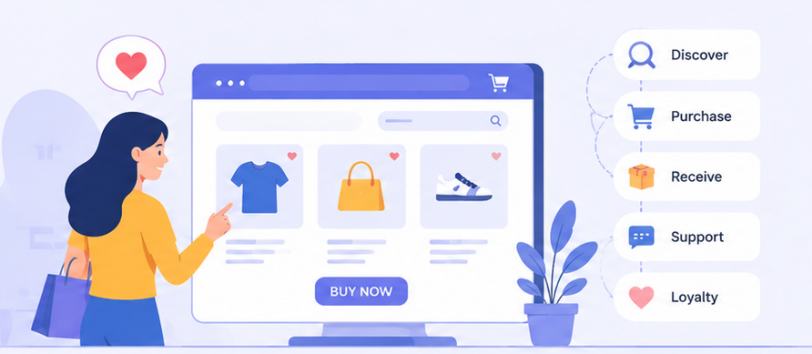
It is the sum of every interaction a customer has with your brand online — from discovery and purchase to support, returns, and long-term engagement. Ecommerce CX is not a single touchpoint. It is an end-to-end journey. The goal is not simply to resolve issues, but to create reasons for customers to come back.
To break it down further, Ecommerce CX encompasses:
Each of these stages presents both risks and opportunities. A frictionless checkout might win a sale, but a confusing return process could cost you a repeat customer. That is why a holistic view of the entire customer lifecycle is essential.
Customer service, by contrast, is reactive — it responds to problems after they occur. Ecommerce CX is proactive. It anticipates needs, removes friction before customers notice it, and designs every step of the journey to be intuitive and enjoyable.
Products can be copied. Prices can be undercut. Logistics networks can be matched. But a memorable, frictionless, and empathetic service experience is extraordinarily hard to replicate. It is built on culture, training, technology, and continuous iteration — not something a competitor can simply buy off the shelf.
Data supports this: studies consistently show that customers are willing to pay more for a better experience. In ecommerce, where price comparison is only a click away, experience has become the deciding factor that tips the scale in your favor.
Growth creates complexity.
Scaling from hundreds to millions of orders introduces fragmentation — multiple languages, time zones, channels, and cultural expectations. A support team that once operated from a single office now needs to coordinate across continents. A knowledge base that served a local audience must now address global use cases.
Maintaining both speed and quality becomes one of the most difficult equations to solve. When response times lag or information becomes inconsistent, customer trust erodes quickly. And in ecommerce, lost trust rarely comes back.
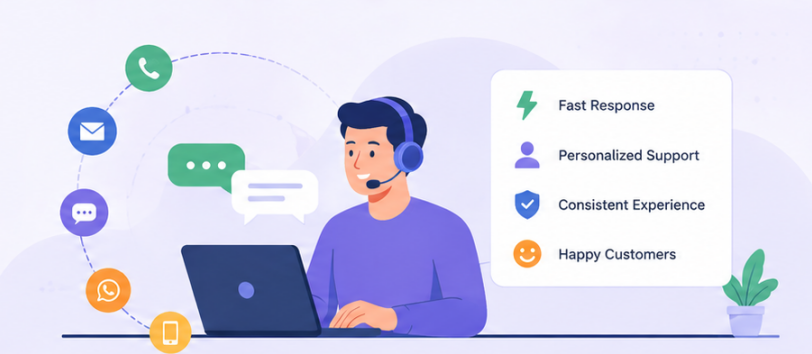
Customers expect answers in seconds, not hours. They have been conditioned by on-demand services to expect immediacy at every step. When they need help with order tracking, product specifications, shipping updates, or return instructions, waiting is not just frustrating — it is a reason to switch brands.
To meet these expectations, ecommerce businesses can combine self-service knowledge bases, intelligent automation, and well-trained human teams to ensure the right information reaches the right customer at the right moment. The goal is not to eliminate human interaction, but to make every interaction count.
Generic responses and mass communications no longer work. Customers want brands to recognize them, remember their preferences, and anticipate their needs. Personalization in Ecommerce CX can take many forms:
When done right, personalization transforms a transactional relationship into a relational one. Customers feel seen and valued — and that emotional connection is a powerful driver of loyalty.
Customers interact with brands across multiple channels — sometimes within a single shopping journey. They might discover a product on social media, browse on a mobile app, complete the purchase on a desktop website, and reach out for support via live chat or email.
A strong Ecommerce CX strategy ensures that customers receive consistent, coherent experiences across every channel. Information is synchronized, context is preserved, and customers never have to repeat themselves. This level of integration requires robust technology infrastructure and carefully designed operational workflows.
There is a common fear that AI will replace human customer service roles. In reality, the most effective Ecommerce CX strategies use AI to augment human capabilities — not to eliminate them.
AI excels at handling repetitive, high-volume queries, analyzing customer feedback at scale, identifying emerging trends, and helping agents retrieve information faster. This frees human experts to focus on complex, high-stakes, and emotionally nuanced situations where empathy and judgment matter most.
The winning formula is clear: Efficiency + Empathy = Irreplaceable CX.
During peak shopping events like Black Friday, Cyber Monday, and seasonal holiday sales, customer inquiry volumes can spike by 300% or more. Standard support capacity is often overwhelmed, leading to longer response times, frustrated customers, and burned-out teams. Without scalable support operations, these high-revenue periods can paradoxically damage long-term customer relationships.
Globalization adds another layer of complexity. An ecommerce brand serving customers across North America, Europe, and Asia must manage:
This demands a CX infrastructure that is both elastically scalable — able to flex up and down with demand — and locally adaptable — capable of delivering culturally relevant experiences in every market.
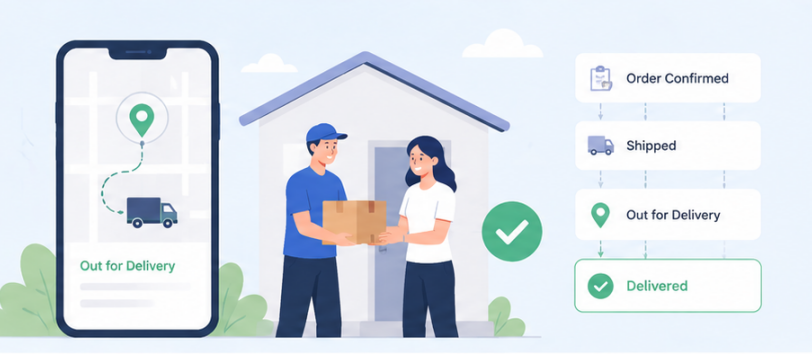
Measuring customer experience is not just about tracking operational metrics. It is about understanding how experience quality translates into business outcomes. We recommend monitoring the following five core indicators:
These metrics not only reflect service quality — they directly reveal how CX contributes to revenue growth and long-term brand value.
We believe technology provides the structure, but human expertise brings the soul.
Nexlence offers ecommerce brands an integrated CX solution that combines technology, operational best practices, and seasoned expert teams to help you:
We turn the tension between "scale" and "personalization" into a competitive advantage. Our approach is not one-size-fits-all; we tailor our support to your brand voice, your customer profile, and your business goals.
Ecommerce CX covers the entire customer journey across all digital touchpoints. This includes pre-purchase activities like product discovery and website browsing, the purchase process itself (checkout, payment, order confirmation), and post-purchase interactions such as shipping updates, customer support, returns and refunds, and ongoing engagement communications. It is a holistic view of how customers experience your brand online.
Traditional customer service is reactive — it responds to customer questions or complaints after they arise. Ecommerce CX, by contrast, is proactive and comprehensive. It involves designing every step of the customer journey to be seamless, intuitive, and enjoyable, rather than just solving problems when they occur. Customer service is a component of CX, but CX encompasses the entire brand-customer relationship.
Customer expectations have risen dramatically. With more choices than ever and switching costs near zero, customers now judge brands not only by products and prices but by the quality of every interaction. Additionally, the pandemic accelerated digital adoption, making ecommerce the primary shopping channel for millions of people. Brands that fail to deliver strong CX lose customers quickly — and often permanently.
Absolutely yes. In fact, CX can be a powerful differentiator for smaller brands competing against larger players. While enterprises have resources for massive technology investments, smaller brands can often move faster, be more agile, and deliver more personalized service. Many CX improvements — such as clearer communication, faster responses, and easier return processes — require commitment and focus, not necessarily a large budget.
The future of Ecommerce CX belongs not to the fastest response, but to brands that anticipate needs and consistently exceed expectations.
It is no longer enough to be reactive. The brands that will lead the next decade are those that design experiences with intention — using data to understand customers deeply, technology to remove friction, and human expertise to build genuine emotional connections.
When strategy, technology, and human insight converge, customer experience stops being a cost center — and becomes your most durable growth engine.













 PREVOUS ARTICLE