We use cookies to improve our site. By using or further navigating our site you accept our cookie policy.Please click here to check the Privacy Policy and Cookie Policy.



Smart
Empowerment

2026-09-22
 Nexlence
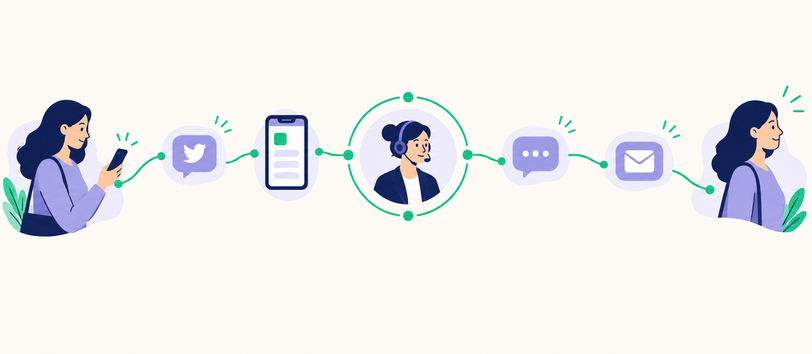
As global brands fight for user retention, transitioning to modern customer service outsourcing services has evolved far beyond traditional call center metrics—giving rise to strategic Customer Experience BPO (CX BPO).
For years, outsourcing customer service largely meant transferring a defined set of support tasks to an external team. Customers called a contact center, agents answered questions, and managers measured performance through metrics such as average handle time, response speed, and call volume.
That model still has a place. But customer interactions have changed.
A customer may discover a product through social media, place an order through an app, ask a question through live chat, follow up by email, and then expect a consistent answer when contacting a support agent. From the customer's perspective, these are not separate service channels. They are different parts of the same relationship with a brand.
This shift is helping drive the growth of Customer Experience BPO, or CX BPO. Instead of focusing primarily on handling individual interactions, CX BPO connects customer support operations with broader customer experience goals, combining people, technology, data, and multiple communication channels.
So, what exactly makes CX BPO different from a traditional call center? And when does a business actually need this more advanced model?
Customer Experience BPO is the outsourcing of customer-facing operations with a broader focus on the quality, consistency, and business impact of the customer experience.
Traditional outsourcing often asks:
How many customer interactions can the service team handle?
CX BPO asks a larger question:
What is happening across the customer journey, and how can the operation improve the experience while remaining efficient and scalable?
This distinction matters because customer service is only one part of the overall customer experience.
A customer might contact a company because an order is late, a payment failed, a product is difficult to use, or a subscription needs to be changed. The support interaction itself may be handled correctly, yet the customer can still have a poor experience if information is inconsistent across channels, the issue has to be explained repeatedly, or the resolution takes too long.
CX BPO therefore looks beyond individual conversations.
It can connect customer support operations across voice, email, live chat, messaging, social platforms, and other digital touchpoints while using operational data to identify patterns in customer behavior and service performance.
The goal is not simply to outsource more interactions. It is to create a customer support operation that can understand, respond to, and continuously improve customer experiences at scale.
The clearest way to understand CX BPO is to compare its operating model with the traditional call center.
| Dimension | Traditional Call Center | Customer Experience BPO |
|---|---|---|
| Primary focus | Handling calls and inquiries | Improving broader customer experiences |
| Main channels | Primarily voice | Voice, chat, email, social and messaging |
| Operational view | Individual interactions | Customer journeys and cross-channel interactions |
| Technology | Contact center systems and basic automation | AI, automation, analytics and connected CX technology |
| Typical metrics | AHT, call volume, response time | CSAT, NPS, FCR, customer effort and operational performance |
| Customer data | Often interaction-specific | More connected customer and interaction insights |
| Service model | Reactive | Reactive plus increasingly proactive |
| Human role | Handles most customer interactions | Focuses on judgment, complexity and high-value interactions |
| Business objective | Efficient service delivery | Service efficiency combined with customer experience outcomes |
The difference is not that traditional call centers are outdated or that every business needs a sophisticated CX operation.
The real difference is what the outsourcing model is designed to optimize.
A traditional call center may succeed when it answers calls quickly and keeps service costs under control. A CX BPO operation has to consider what happens before, during, and after those interactions.
For example, if a customer repeatedly contacts support about the same problem, simply reducing average handle time does not necessarily improve the experience. A CX-oriented operation would also examine first-contact resolution, repeat contacts, escalation patterns, customer satisfaction, and the potential reason behind the recurring issue.
This changes the conversation from transaction management to experience management.
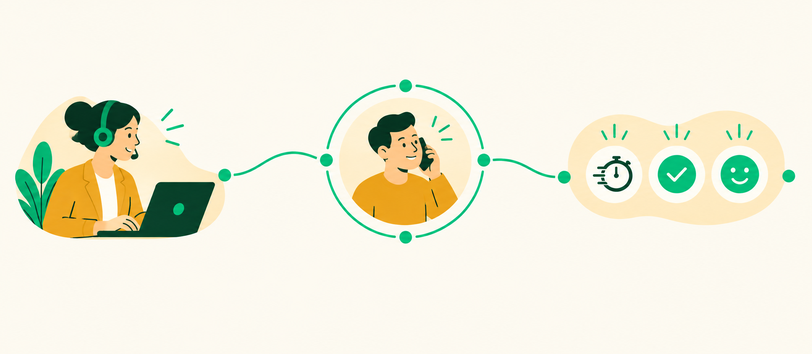
Metrics such as Average Handle Time (AHT) remain useful because businesses need to understand operational efficiency.
The problem occurs when one metric becomes the definition of good customer service.
Imagine two support teams.
Team A has an average handle time of four minutes. Team B averages seven minutes.
At first glance, Team A appears more efficient.
But suppose Team A resolves only 65% of customer issues during the first interaction, while Team B resolves 85%. Customers handled by Team A may need to contact the company again, increasing total interaction volume and creating more frustration.
In this situation, a lower AHT does not automatically mean a better customer experience.
This is why CX BPO increasingly considers multiple dimensions of performance.
| Metric | What It Measures | Why It Matters |
|---|---|---|
| AHT | Average time spent handling an interaction | Helps assess operational efficiency |
| First Contact Resolution | Whether an issue is resolved during the first interaction | Indicates resolution effectiveness |
| CSAT | Customer satisfaction after an interaction | Shows how customers perceive the service |
| NPS | Likelihood of recommending the brand | Provides a broader view of customer loyalty |
| Customer Effort | How easy it was for the customer to resolve an issue | Identifies friction in the service journey |
| Response Time | How quickly a customer receives a response | Important for time-sensitive support |
| Repeat Contact Rate | How often customers need to contact support again | Helps identify unresolved issues |
The important point is not that one metric should replace another.
A mature CX BPO model looks at these measurements together.
A faster interaction that fails to resolve the problem may create additional contacts. A highly personalized interaction that takes significantly longer than necessary may create operational inefficiency. The objective is to find the right balance between efficiency, resolution quality, and customer experience.
One of the biggest changes in customer service is the move from channel-based support to connected customer journeys.
A customer may begin with a chatbot, move to live chat, send an email later, and eventually contact an agent through another channel. If each team sees only its own interaction, the customer may have to repeat the same information multiple times.
That creates what can be called channel fragmentation.
The business may believe it operates five customer service channels. The customer experiences one brand.
CX BPO addresses this gap by looking at how different touchpoints work together rather than treating every channel as an isolated operation.
This does not necessarily mean that every company needs every possible channel. The right channel mix depends on the customer base, product, market, and type of interaction.
For a consumer electronics company, live chat and technical product questions may be particularly important. For an e-commerce brand, order tracking, returns, messaging, and social customer care may have greater relevance.
The key is consistency.
Customers should not receive completely different information simply because they switched from one communication channel to another.
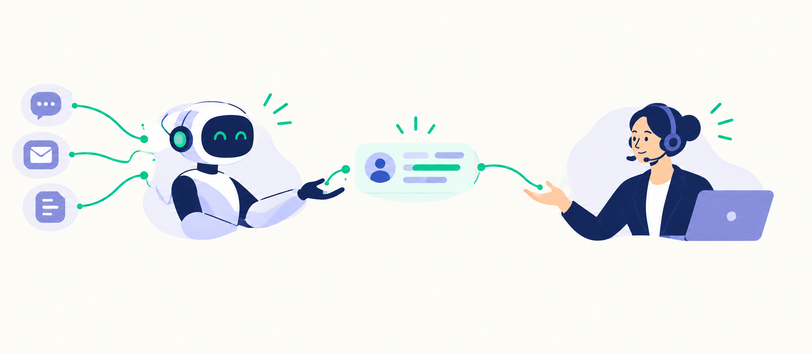
AI is another major reason CX BPO is becoming different from traditional outsourcing.
However, the most meaningful change is not simply replacing human agents with chatbots.
A modern CX operation can use AI across multiple layers of the customer service process.
AI can help identify customer intent, route interactions, retrieve relevant information, support agents during conversations, analyze large volumes of interactions, and identify patterns that may be difficult for managers to detect manually.
This creates a different operating model.
Instead of:
Customer → Agent → Resolution
the model increasingly becomes:
Customer → AI-assisted operation → Human expertise when needed → Resolution → Data and insight
The human role also changes.
When AI can assist with repetitive or information-heavy tasks, human agents can spend more time on interactions that require judgment, empathy, negotiation, or complex problem solving.
This is particularly important for complaints, escalations, high-value customers, unusual cases, and situations where a standard automated response is not sufficient.
The strongest model is therefore not necessarily AI versus humans.
It is AI supporting humans where automation creates efficiency, while people provide judgment where customer situations require it.
This is one of the most important differences between customer service outsourcing and CX BPO.
Consider an online retailer receiving a high number of customer contacts about delayed deliveries.
A traditional support operation may focus on answering those tickets more efficiently.
A CX-oriented operation can ask a different question:
Why are so many customers contacting support about delivery delays in the first place?
The answer could involve inaccurate delivery estimates, insufficient order-status information, unclear notifications, or gaps between logistics data and customer-facing communication.
Customer support has therefore become a source of operational intelligence.
Support interactions can reveal recurring product problems, confusing policies, checkout friction, delivery issues, and other sources of customer dissatisfaction.
When these insights are connected to broader CX operations, the support team is no longer simply reacting to customer problems.
It can help the business understand where those problems originate.
Not every business needs a sophisticated CX BPO model from day one.
A smaller company with a limited customer base and a small number of straightforward inquiries may be able to manage support internally.
The need becomes more apparent as customer interactions become more complex.
A business may begin considering CX BPO when it has rapidly increasing interaction volumes, multiple customer service channels, international expansion, growing multilingual requirements, inconsistent service quality, or difficulty maintaining response times without continuously increasing internal headcount.
Another important signal is when customer service data contains valuable information but the company does not have the resources to analyze it effectively.
For example, a company may know that CSAT is declining but not understand why. Looking only at individual tickets may not reveal the broader pattern.
A CX BPO partner can provide additional operational capacity while helping organize customer interaction data, quality monitoring, and performance analysis around the company's customer experience goals.
The question is therefore not simply:
Can we outsource customer service?
It is:
What part of our customer experience operation should be supported externally, and what outcomes do we expect that operation to improve?
CX BPO is often associated with large global brands because these companies typically have high interaction volumes, multiple markets, and complex customer journeys.
But scale alone does not determine whether CX BPO is appropriate.
A fast-growing digital business may experience CX complexity long before it reaches enterprise scale.
For example, a company entering three new international markets may suddenly need multilingual support, extended service hours, additional channels, and more consistent quality monitoring.
Hiring separate internal teams for every market may create significant management complexity.
An outsourcing model can provide access to broader operational capacity without requiring the company to build every capability internally.
The important consideration is whether the external operating model matches the company's actual customer experience requirements.
Choosing a CX BPO provider should involve more than comparing agent costs.
A provider may have a large workforce but still be a poor fit if it cannot support the channels, languages, customer segments, or operational complexity of the business.
The evaluation should begin with the customer journey.
What types of interactions does the business receive? Where do customers experience friction? Which interactions require human judgment? Which tasks could benefit from automation? Which markets require local language and cultural understanding?
Technology should also be evaluated in context.
AI capabilities are increasingly important, but the question is not whether a provider uses AI. The more useful question is where AI is applied and how human expertise remains involved.
Quality management is another important consideration.
A CX BPO partner should be able to measure service performance while also helping identify recurring issues and customer experience trends. This is especially important when the outsourced operation becomes a significant source of customer interaction data.
Finally, scalability matters.
A provider that works well during normal volumes but cannot support seasonal peaks, new markets, additional languages, or new channels may create another operational constraint as the business grows.
The answer depends on the problem the business is trying to solve.
| Business Situation | Traditional Call Center May Be Enough | CX BPO May Be More Appropriate |
|---|---|---|
| Primarily voice-based support | ✓ | |
| Simple, predictable inquiries | ✓ | |
| Need to add basic support capacity | ✓ | |
| Multiple digital channels | ✓ | |
| International customer base | ✓ | |
| Complex customer journeys | ✓ | |
| Complex customer journeys | ✓ | |
| Need AI-assisted customer operations | ✓ | |
| Large volume of customer interaction data | ✓ | |
| Need broader CX insights | ✓ | |
| Frequent escalation or repeat-contact problems | ✓ |
This does not mean a traditional call center and CX BPO are completely separate categories.
There is significant overlap.
A modern CX BPO operation can still include voice support, contact center agents, and traditional customer service functions. The difference is the broader operational framework surrounding those functions.
In other words, CX BPO is not about eliminating the call center. It is about putting customer service into a larger customer experience model.
The next stage of customer experience outsourcing is likely to be less about simply increasing the number of interactions an external team can handle.
Instead, the focus will increasingly shift toward how intelligently those interactions are managed.
AI can process large volumes of information and identify patterns. Automation can reduce repetitive work. Human specialists can handle complex situations. Real-time operational data can help managers understand performance as customer interactions happen rather than relying entirely on retrospective reports.
At the same time, customers will continue to expect brands to recognize their context across channels.
This means the future CX BPO model will increasingly combine three capabilities:
technology for scale, data for visibility, and people for judgment.
Companies that successfully combine these elements can move beyond treating customer service as a cost center and start using customer interactions as a source of operational and customer insight.
Nexlence approaches customer experience through a combination of AI-driven capabilities, omnichannel customer engagement, real-time data insights, and human operational expertise.
Rather than treating every customer interaction as an isolated ticket, a modern CX operation can connect interactions across customer touchpoints while using AI to support efficiency, quality monitoring, and operational visibility.
This model is particularly relevant for businesses dealing with high interaction volumes, multiple markets, multilingual requirements, and increasingly complex digital customer journeys.
The objective is not to automate every customer interaction or simply add more agents.
It is to create an operating model where technology handles scale and repetitive processes while experienced teams remain involved when customers need context, judgment, or human assistance.
AI can automate or assist with many repetitive and information-heavy tasks, but complex complaints, sensitive situations, escalations, and interactions requiring judgment can still benefit from human expertise. A strong CX BPO model often combines AI capabilities with human support.
Yes. CX BPO is not limited to large enterprises. Growing businesses can use outsourcing to expand support capacity, enter new markets, add languages or channels, and maintain service quality without building every operational capability internally.
Businesses should evaluate a provider based on its ability to support their customer journey, channels, markets, languages, technology requirements, quality management, scalability, and desired CX outcomes—not simply based on the number of agents or the lowest operating cost.
Customer Experience BPO represents a broader evolution of the traditional outsourcing model.
The fundamental question is changing from “How many customer interactions can an external team handle?” to “How can an external CX operation help us deliver better customer experiences at scale?”
That shift affects everything from the metrics a business tracks to the technology it uses and the role human agents play.
Traditional call centers will continue to serve businesses with straightforward support requirements. But for organizations managing multiple channels, markets, languages, and increasingly complex customer journeys, CX BPO provides a broader framework for connecting service operations with customer experience outcomes.
In 2026, the most effective CX outsourcing models are unlikely to be defined by agents alone. They will be defined by how effectively AI, human expertise, omnichannel operations, and customer data work together.
Related guide:Call Center BPO Services: A Guide to Choosing the Right Customer Support Partner










 PREVOUS ARTICLE