We use cookies to improve our site. By using or further navigating our site you accept our cookie policy.Please click here to check the Privacy Policy and Cookie Policy.



Smart
Empowerment

2026-11-11
 Nexlence

The best CX outsourcing companies help businesses turn customer interactions into better business outcomes. Instead of measuring success only by response speed or the number of tickets handled, they focus on reducing customer friction, improving the buying experience, and maintaining relationships after a purchase. For growing businesses, CX outsourcing can connect customer support with customer retention, operational efficiency, and long-term revenue opportunities.
A customer buys a smart home device from an international brand. The product arrives, but the customer cannot connect it to the home network.
They contact support and receive basic instructions. The problem remains unresolved, so they try another channel. Eventually, someone helps them complete the setup.
The ticket is closed. From the support team's perspective, the issue has been handled.
But what happens next?
Will that customer recommend the product? Will they purchase another device from the same brand? Or will they hesitate before buying again?
This is where the difference between customer service and customer experience becomes important.
Customer service usually focuses on resolving individual requests. Customer experience looks at the customer's entire relationship with the business, including everything that happens before, during, and after a transaction.
For companies that want to grow, these two functions should not operate independently.
Many businesses measure customer service through response time, ticket volume, and average handling time.
These indicators are useful, but they can create a misleading picture when viewed alone.
Imagine a support team that reduces its average handling time by 20%. On paper, productivity has improved. However, if customers need to contact the company multiple times because their original problems were not fully resolved, the business may actually be creating more work and a worse customer experience.
The same problem occurs when teams focus exclusively on clearing backlogs.
A customer asking about a delayed delivery does not necessarily need another fast response. They need accurate information, a realistic resolution, and someone who can coordinate the next step.
This is why CX outsourcing companies should be evaluated on more than operational efficiency. Their work should contribute to a smoother customer journey.
Customers often have questions before they are ready to spend money.
A buyer comparing home energy storage products may need to understand capacity, compatibility, installation requirements, and expected usage. If the information is difficult to obtain, the customer may postpone the purchase or look elsewhere.
A knowledgeable support team can help remove this uncertainty by providing timely product guidance through appropriate communication channels.
The value is not simply that an inquiry gets answered. It is that a potential customer has a clearer reason to move forward with the purchase.
The post-purchase stage is where many customer relationships become stronger or weaker.
For a connected device, installation and configuration may be the first real interaction a customer has with the product. If setup is confusing and support cannot provide clear guidance, the customer's initial excitement can quickly turn into frustration.
A well-designed CX operation considers these moments in advance.
Agents should have access to reliable product information, clear troubleshooting procedures, and appropriate technical escalation. Customers should also receive consistent guidance when they move between communication channels.
This reduces unnecessary friction and gives customers more confidence in the brand.
Consider an airline passenger whose flight schedule changes shortly before departure.
The passenger may need to confirm the new departure time, change a connecting arrangement, or ask about ticket options. During a disruption, several customers may contact support at the same time.
If information is inconsistent or assistance is difficult to obtain, frustration can quickly escalate.
The quality of the response matters, but so does coordination between notifications, booking assistance, and follow-up communication.
A capable CX operation helps businesses manage these moments with greater consistency. It cannot prevent every service failure, but it can influence how customers experience the company's response.
The strongest CX outsourcing partnerships are built around how customers interact with a business, not around a fixed list of services.
They should be able to connect several important capabilities:
Customer journey understanding: Identifying where customers experience confusion, delays, or unnecessary effort.
Consistent communication: Maintaining appropriate service standards across voice, email, live chat, and other relevant channels.
Industry and product knowledge: Preparing agents to handle real product questions instead of relying entirely on generic scripts.
Issue ownership: Making sure unresolved cases have clear escalation and follow-up responsibilities.
Performance insight: Using customer interactions to identify recurring problems and opportunities for improvement.
These capabilities matter because a growing business does not just need more conversations handled. It needs fewer problems repeated and more customers receiving the help they actually need.
Yes, but the relationship should be understood realistically.
An outsourced CX team does not automatically increase sales simply by answering more inquiries. Revenue impact depends on the nature of customer interactions, product demand, service quality, and the way the business measures results.
There are several ways CX operations can contribute.
First, effective pre-purchase assistance can reduce uncertainty during the buying process. Customers who receive relevant product guidance may be better positioned to make a purchasing decision.
Second, resolving post-purchase problems effectively can help protect existing customer relationships. This is particularly important for businesses that depend on repeat purchases, subscriptions, or long-term product usage.
Third, analyzing recurring customer complaints can reveal problems that affect more than one individual customer. Improving unclear product instructions, delivery communication, or onboarding processes may reduce friction across the entire customer base.
The important point is that customer experience creates value through multiple stages of the relationship. Its contribution should be measured through a combination of service performance and business outcomes, rather than attributing every additional sale directly to the outsourced team.
For Nexlence, effective CX outsourcing starts with understanding what customers actually need at different stages of their journey.
A business selling intelligent hardware, for example, may face a very different support challenge from an international retailer. One needs knowledgeable assistance with device configuration and troubleshooting; the other may need coordinated communication around orders, shipping, and returns.
Treating both businesses with the same generic support workflow would overlook the operational differences that shape customer satisfaction.
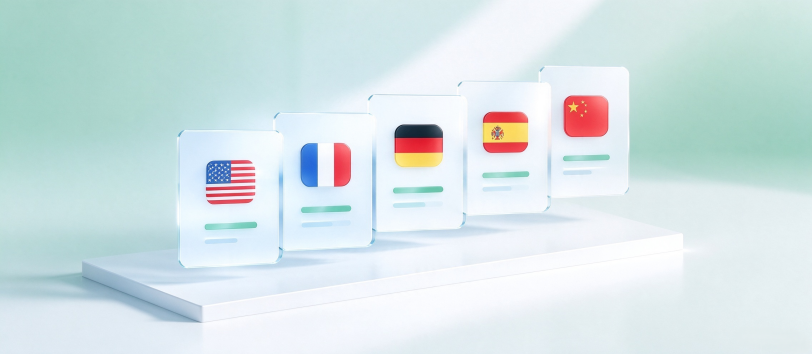
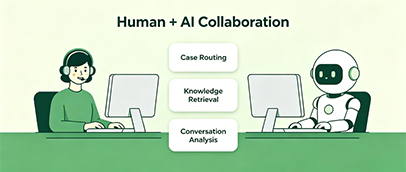
Nexlence supports businesses through multilingual customer communication, omnichannel operations, and industry-oriented service workflows. Its human-AI collaboration approach can help organize routine inquiries and support agents with information retrieval, while human specialists handle situations requiring judgment, explanation, and more complex problem-solving.
This allows the support operation to be designed around actual customer needs rather than simply the number of incoming tickets.
For businesses expanding into new markets or managing increasingly complicated products, this distinction matters. Customer experience should remain consistent even when service volume, language requirements, and customer expectations change.
A CX partnership should have measurable objectives from the beginning.
However, the right measurements need to go beyond how quickly agents respond.
| Metric | What to look for |
|---|---|
| Customer Satisfaction (CSAT) | Whether customers are satisfied with the assistance they receive |
| First Contact Resolution (FCR) | Whether customers can get their problems resolved without repeated contact |
| Customer Effort Score (CES) | How easy it is for customers to obtain help |
| Repeat Contact Rate | Whether the same problems keep returning |
| Customer Retention | Whether customers continue their relationship with the business |
| Conversion Rate | Whether relevant pre-purchase interactions help customers complete purchases |
These indicators should be evaluated together.
For example, an improvement in CSAT alongside a reduction in repeat contacts may suggest that customers are receiving more effective assistance. An improvement in conversion rate may indicate that product consultations are helping remove purchasing barriers.
The purpose of measurement is not to produce an impressive monthly report. It is to identify what needs to change in the customer experience and whether those changes are making a meaningful difference.
A provider that works well for a small support operation may not be suitable when the business enters new markets or introduces more complex products.
Before choosing a partner, businesses should consider how their customer experience requirements may change over the next 12 to 24 months.
Will additional languages be needed? Will more technical inquiries appear? Will customer interactions move across additional channels? Will the business need extended support hours or more sophisticated reporting?
It is also important to examine how the provider manages training, quality control, data access, and escalation. These operational details often determine whether an outsourcing partnership remains effective after the initial launch.
Rather than outsourcing everything immediately, businesses can begin with a clearly defined customer journey or service function. The results can then guide future expansion.
The best CX outsourcing companies are those that can adapt their operations as the business develops, without losing sight of the customer experience that the partnership was intended to improve.
Related reading: What Do Customer Experience Solutions Companies Actually Do?
CX refers to the overall experience a customer has with a business, from discovering a product to receiving after-sales assistance. UX focuses more specifically on how a person interacts with a particular product, website, or application. A confusing product interface is a UX issue, while the support received when trying to resolve that issue is part of the broader CX.
Depending on the agreement, CX outsourcing can include customer service, technical assistance, multilingual support, digital communication, customer care, quality monitoring, customer feedback analysis, and selected customer journey management activities.
Yes. B2B businesses can outsource customer onboarding assistance, technical inquiries, order coordination, account-related support, and ongoing service communication. The operating model should account for longer customer relationships, specialized knowledge, and communication between multiple stakeholders.
Implementation depends on the number of channels, supported languages, system integrations, training requirements, and complexity of customer journeys. A focused support function may be easier to launch than a comprehensive CX operation. A pilot phase can help identify problems before expanding the scope.
Brand consistency requires clear communication guidelines, product knowledge documentation, agent training, quality reviews, and defined escalation procedures. Outsourced agents should understand not only what information to provide but also how the business expects customers to be treated.
Customer experience becomes a growth issue when every interaction influences whether customers trust a business enough to continue the relationship.
A company can invest heavily in attracting new customers, but poor onboarding, inconsistent support, or unresolved after-sales problems can undermine that investment.
The role of CX outsourcing is therefore not simply to move customer inquiries outside the company. Effective customer service outsourcing services help build an operation that enables customers to make decisions, solve problems, and maintain confidence in the brand.
For growing businesses, the right outsourcing partner should understand this broader responsibility. When customer service, technical assistance, communication channels, and operational insights work together, CX can become a more meaningful contributor to sustainable business growth.
Nexlence helps businesses build customer experience operations around their products, markets, and customer journeys, supporting a more consistent experience as the business scales.














 PREVOUS ARTICLE
