Most ecommerce founders don't ask "should I outsource customer service" as a yes-or-no question. The real question
is when. Answer too early, and you're paying for capacity you don't need yet. Answer too late, and slow response
times start showing up in your reviews, your return rate, and eventually your revenue.
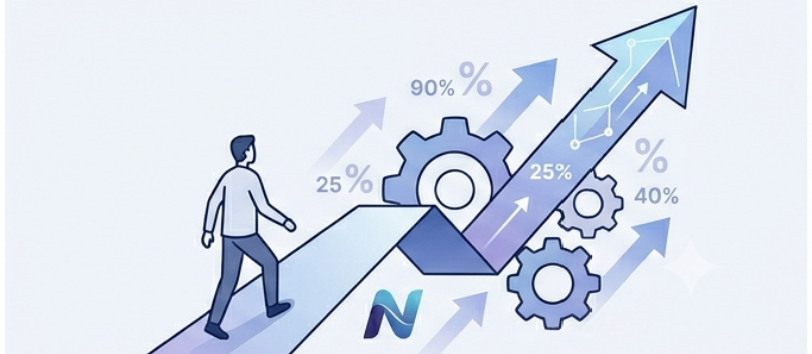
Instead of another generic list of outsourcing benefits, this guide maps ecommerce customer service outsourcing to the actual stages
of store growth — so you can see exactly where your business sits today, what "good support" looks like at that
stage, and what signals mean it's time to bring in outside help.
The Three Stages of Ecommerce Support
Every online store tends to move through the same three phases as order volume grows. Outsourcing decisions look
different at each one.
Stage 1: The DIY Stage
At this point, you or a small internal team are answering every email, chat, and DM yourselves. Volume is manageable
— maybe a few dozen tickets a day — and you know every customer's order by heart. This is completely normal, and
outsourcing usually isn't necessary yet.
The signal you're leaving this stage: response times start slipping past 24 hours, or you're
answering support messages instead of working on the product, marketing, or supplier relationships.
Stage 2: The Hybrid Stage
This is where most ecommerce customer service outsourcing decisions actually begin. Instead of handing off
everything, stores typically outsource one specific pain point first — usually live chat coverage, overflow during a
sale, or after-hours email. The internal team stays involved in complex or sensitive cases, while an outsourced team
handles volume and routine questions like order status, shipping delays, and simple returns.
The signal you're leaving this stage: the hybrid setup starts feeling like a patchwork — multiple
tools, inconsistent tone across channels, or a seasonal spike that overwhelms both teams at once.
Stage 3: The Scale Stage
At this point, support has to work across time zones, languages, and channels simultaneously — email, live chat,
social media, and marketplace messaging (Amazon, Shopify, Etsy) all at once, often in multiple currencies and
markets. This is where a fully outsourced, dedicated CX operation makes the most sense, because building that
internally would require hiring, training, and managing dozens of people across regions. You can see what an
operation built for this stage typically looks like on Nexlence's digital customer experience services page, which
outlines how omnichannel coverage and multilingual teams are structured for global brands.
A 7-Point Checklist: Is It Time to Outsource?
Rather than guessing, run through these questions:
1. Are tickets taking longer than 4–6 hours to get a first response? Slower than that, and cart
abandonment and negative reviews tend to climb.
2. Do you dread your next big sale event? If Black Friday or a flash sale means all hands on deck
answering emails instead of running the promotion, that's a capacity problem.
3. Is support eating more than 10–15 hours a week of founder or ops time? That's time not spent on
growth.
4. Are you getting orders from customers who don't speak your team's primary language? Machine
translation only goes so far for disputes or complaints.
5. Do you need coverage outside your own working hours? Time-zone gaps are one of the most common
reasons for delayed responses.
6. Is your return/refund process inconsistent depending on who on the team handles it?
7. Are you selling across multiple marketplaces (Shopify, Amazon, Etsy) with messages scattered
across different inboxes?
Two or more "yes" answers usually means you've outgrown your current stage.
What "Good" Looks Like at Each Stage
| Stage | Typical Channels | Realistic KPI Targets | Best Outsourcing Fit |
|---|
| DIY | Email, maybe basic chat | First response under 24h | None yet — or a small overflow trial |
| Hybrid | Email + live chat, some social | First response under 4h, CSAT 85%+ | Single-channel outsourcing (chat or email), seasonal overflow |
| Scale | Omnichannel: chat, email, social, marketplaces, multilingual | First response under 1h on chat, CSAT 90%+, 24/7 coverage | Dedicated outsourced team, multilingual, full coverage |
Choosing a Partner That Matches Your Stage — Not Just Your Budget
A common mistake is picking a provider based purely on price, without checking whether they can actually operate at the stage you're moving into. Before signing anything, confirm:
Platform fit. Can they work directly inside Shopify, WooCommerce, Zendesk, or Gorgias — not a disconnected spreadsheet process?
Real order visibility. Agents need live access to order status and shipping data to resolve tickets without escalating everything back to you.
Scalability plan. Ask specifically how fast they can add agents before a known peak period, and how pricing adjusts.
Language coverage that matches your customer base, not just a generic multilingual claim.
Transparent reporting — real-time dashboards for response time, resolution rate, and CSAT, not a monthly PDF summary.
If you're not sure which stage your business is actually in, it can help to look at how outsourcing partners describe their own growth — Nexlence's overview of its global CX approach breaks down how support models shift from single-market to fully multilingual, omnichannel operations as a brand scales.
A Quick Look at Scale-Stage Outsourcing in Practice
One useful way to understand what Stage 3 support actually looks like is through global expansion moves that outsourcing providers themselves make. For example, Nexlence's recent expansion into a new delivery hub in Lima, Peru was built specifically to support ecommerce brands scaling across Asia and Latin America — the kind of multi-region, multilingual coverage that becomes necessary once a store is selling well beyond its home market.
Common Mistakes When Moving Between Stages
Jumping straight to full outsourcing from the DIY stage. Skipping the hybrid trial makes it harder to catch quality issues early, since there's no internal benchmark to compare against.
Staying in the hybrid stage too long. If overflow support has become permanent rather than seasonal, it's usually cheaper and more consistent to formalize a dedicated team.
Choosing a general call-center provider for scale-stage needs. Multilingual, omnichannel ecommerce support requires platform fluency that generalist providers often don't have.
Not revisiting KPIs as you move stages. A response-time target that worked at 50 tickets a day won't hold up at 500.
Frequently Asked Questions
How do I know which stage my ecommerce business is actually in? Look at response times and founder/ops involvement first. If tickets are answered within a day and support takes a manageable few hours a week, you're likely still in the DIY stage. If support is inconsistent during sales or scattered across multiple people, you're probably in the hybrid stage. If you're managing multiple languages, time zones, and marketplaces at once, you're in the scale stage.
Can I skip the hybrid stage and outsource everything at once? You can, but it's riskier without an internal benchmark for quality. Most stores get better results by testing a single channel first, reviewing performance, and then expanding.
Is outsourced support only worth it for large ecommerce brands? No. Even small stores in the hybrid stage often benefit from outsourcing overflow or after-hours coverage — it's the scope that changes across stages, not whether outsourcing makes sense at all.
What's the biggest sign that a store has outgrown its current support setup? Consistently slow first-response times, especially during sales events, combined with founders or ops staff spending hours a week manually resolving order and shipping tickets.
Do outsourced teams need access to my order and shipping systems? Yes, ideally with secure, permissioned access to your ecommerce platform. Without it, agents can't answer order-status or shipping questions accurately, and tickets end up bouncing back to your internal team anyway.
Conclusion
The question isn't whether ecommerce customer service outsourcing works — it's whether it matches where your business actually is right now. A store answering 30 tickets a day doesn't need the same setup as one managing five marketplaces across three continents. By identifying your current stage, tracking the signals that show you've outgrown it, and choosing a partner built for where you're heading next, outsourcing becomes a growth tool rather than a gamble.
If you're trying to figure out which stage your store is in and what kind of support setup makes sense next, Nexlence can walk through your current volume, channels, and growth plans to map out the right fit.
Talk to Nexlence About Your Ecommerce Support Stage →














 Nexlence


 PREVOUS ARTICLE