
Quick Answer
Choosing a multilingual customer service outsourcing partner involves more than checking how many languages it supports. A provider may offer broad language coverage but still struggle with inconsistent service quality, poor localization, fragmented customer data, or limited operational flexibility.
Before signing a contract, businesses should watch for seven red flags: unclear language capabilities, limited local understanding, inconsistent service standards, weak knowledge management, overreliance on automation, inflexible delivery capacity, and reporting focused only on response speed.
The right partner should help maintain a consistent customer experience across languages, channels, and stages of the customer journey.
1. It Claims to Support Many Languages but Cannot Prove Real Language Proficiency
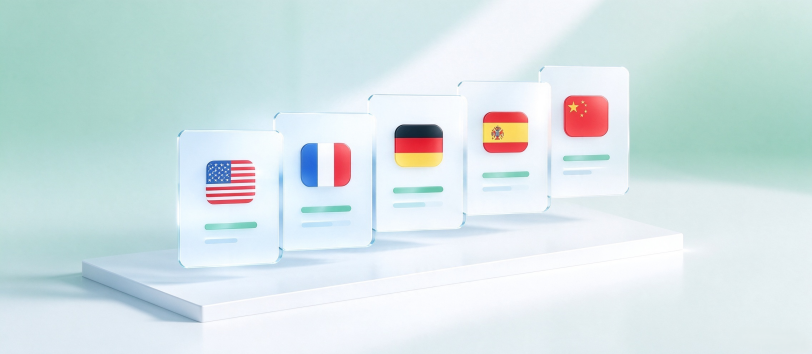
A long list of supported languages does not necessarily mean a provider can deliver quality service in each one.
Some outsourcing companies rely heavily on machine translation or general bilingual agents. This may be sufficient for simple inquiries, but it can create problems when customers use regional expressions, discuss complicated product issues, or expect culturally appropriate responses.
What to check: Ask how language proficiency is assessed, whether native or locally experienced speakers are involved, and how the provider handles quality reviews across different languages.
For example, a customer asking about an airline booking in Spanish may need help understanding local travel terminology and policy details—not simply a translated response.
2. It Treats Translation as Localization
Accurate translation is only the starting point. Customer expectations, communication styles, and service conventions can differ significantly between markets.
A response that sounds professional in one language may feel overly formal, distant, or even inappropriate in another. Without cultural awareness, brands risk delivering technically correct but unsatisfying interactions.
What to check: Ask whether the provider adapts communication guidelines, tone of voice, and customer-handling procedures to local expectations.
A capable multilingual team should understand not only what customers say, but also the context behind their questions and concerns.
3. It Cannot Maintain Consistent Service Quality Across Languages
A provider may deliver excellent English support while struggling to maintain the same standards in less common languages. Different teams may interpret policies differently, use inconsistent terminology, or provide conflicting answers.
This becomes especially problematic for global brands operating across multiple channels and regions.
What to check: Look for unified quality standards, shared knowledge resources, language-specific quality monitoring, and regular performance reviews.
Consistency should not mean giving every customer an identical response. It means maintaining the same level of accuracy, reliability, and brand understanding across markets.
4. Its Knowledge Base Is Generic or Poorly Maintained
Multilingual agents cannot provide reliable support if they lack accurate, accessible information.
Generic scripts and outdated FAQs are particularly risky for smart hardware and cross-border retail brands, where product specifications, troubleshooting procedures, return policies, and regional requirements may change frequently.
A weak knowledge base also affects AI performance. Even advanced AI agents can generate irrelevant or inaccurate answers when their underlying business knowledge is incomplete.
What to check: Ask how the provider builds and updates client-specific knowledge bases, manages multilingual terminology, and identifies knowledge gaps from actual customer interactions.
Knowledge management should be an ongoing operational process, not a one-time document handover.
5. It Relies Too Heavily on AI or Human Agents Alone
AI can handle repetitive inquiries, provide always-on support, and process high volumes of standardized requests. However, it may struggle with sensitive complaints, ambiguous questions, or situations requiring cultural judgment.
On the other hand, relying entirely on human agents can make it difficult to manage fluctuating demand and provide consistent support around the clock.
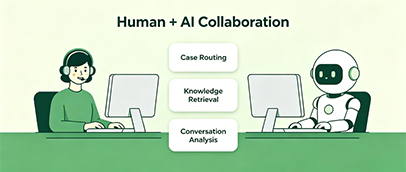
What to check: Evaluate how AI and human agents work together. A practical model should allow AI to handle suitable routine interactions while transferring complex or sensitive cases to trained specialists.
For example, an AI agent may answer common questions about a product's setup process, while a human specialist handles a customer complaint involving repeated product failures.
The goal is not to replace human interaction wherever possible. It is to use automation where it improves service and human judgment where it matters.
6. Its Global Delivery Network Cannot Support Your Operational Needs
Multilingual customer service requires more than hiring agents who speak different languages. Businesses also need reliable delivery locations, workforce coordination, and the ability to respond to changing service demand.
A provider with limited delivery resources may struggle when a brand enters new markets, experiences seasonal peaks, or needs to extend service hours.
What to check: Ask about delivery locations, available CX resources, business continuity arrangements, and how staffing capacity can adjust to demand.
For reference, a provider's delivery footprint can offer a useful indication of its operational resources. Nexlence has delivery capabilities across 10 countries and 22 sites, supported by 800+ CX experts. These resources help support multilingual and cross-market customer operations.
However, businesses should still assess whether the provider's actual language coverage, operating hours, and team structure match their requirements.
7. It Measures Success Only Through Response Time and Cost
Low costs and fast responses may look attractive during vendor evaluation, but they do not necessarily indicate a good customer experience.
If a provider focuses only on handling more tickets in less time, agents may prioritize closing inquiries over understanding customer problems. Repeated contacts, unresolved issues, and declining customer trust can remain hidden behind apparently strong productivity figures.
What to check: Review a broader set of performance indicators, including first-contact resolution, customer satisfaction, repeat contact rates, escalation quality, and customer feedback.
For brands seeking long-term customer relationships, customer service should not end when a ticket is closed. Every interaction can influence whether customers continue to trust and engage with the brand.
What Makes Nexlence a Strong Multilingual Customer Service Outsourcing Partner?
Nexlence combines global delivery resources with specialized CX and technical expertise. Its operations span 10 countries and 22 delivery sites, supported by 800+ CX experts, 30+ intelligent solutions consultants, and 100+ AI technology experts. This foundation enables Nexlence to support multilingual and omnichannel customer service across different markets.
AI-human collaboration and customized knowledge management are at the center of its operating model. Nexlence develops business-specific AI agents supported by customized enterprise knowledge bases and ongoing knowledge operations. AI handles repetitive, standardized inquiries, while human specialists manage complex issues, sensitive conversations, and interactions requiring contextual or cultural understanding. This combination helps improve service efficiency without losing the human connection.
More importantly, Nexlence extends beyond traditional ticket-based customer service through full-lifecycle user operations. Support connects the entire customer journey, from initial brand engagement and product inquiries to usage guidance, after-sales service, and ongoing customer engagement. The goal is not simply to resolve individual issues, but to build customer trust, strengthen brand belonging, and develop long-term customer relationships.
For a broader look at modern outsourcing models, see our guide to customer service outsourcing services.
FAQ
What should businesses look for in a multilingual customer service outsourcing partner?
Businesses should evaluate language proficiency, cultural understanding, quality management, knowledge base capabilities, AI-human collaboration, delivery resources, and performance measurement. Language coverage alone is not enough to guarantee a consistent customer experience.
Is AI enough to provide multilingual customer support?
Not in every situation. AI can efficiently handle repetitive and standardized inquiries, but complex complaints, sensitive conversations, and culturally nuanced issues may require human specialists. A combined model is often more practical.
How can businesses measure multilingual customer service quality?
Useful indicators include first-contact resolution, customer satisfaction, repeat contact rates, response accuracy, escalation quality, and language-specific quality scores. These metrics provide a more complete picture than response time alone.
Conclusion
A multilingual customer service outsourcing partner should do more than translate messages and provide agents in different languages. It should understand local customers, maintain accurate business knowledge, coordinate AI and human support, and deliver consistent service across markets.
By checking these seven red flags before signing a contract, businesses can reduce operational risks and choose a provider that supports both daily customer needs and stronger long-term brand relationships.
Related guide:Multilingual Customer Support: A Practical Guide for Global Brands in 2026















 Nexlence





 PREVOUS ARTICLE
