Subscription businesses live or die by one thing: whether people stick around. Good product, fair pricing, and a great sign-up flow all matter, but the thing that quietly determines whether a customer renews or cancels is often subscription service customer support. Get it right, and support becomes a growth engine. Get it wrong, and even a great product can leak customers month after month.
This guide covers what subscription support really involves, the challenges that make it different from one-time-purchase support, and practical ways to keep customers happy at every stage of their journey.
What Is Subscription Service Customer Support
The Simple Version
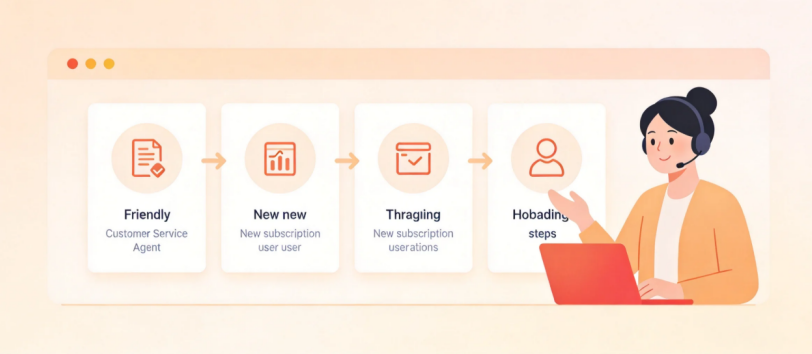
Subscription service customer support is the ongoing help a business provides to people who pay on a recurring basis — whether that's monthly, annually, or usage-based. It covers everything from onboarding and billing questions to plan changes, troubleshooting, and handling cancellation requests. Unlike a one-time purchase, the relationship doesn't end at checkout; support has to keep working for as long as the subscription does.
Why Subscription Models Raise the Stakes
With a one-time sale, a bad support experience might just mean a lost review. With a subscription, it usually means a lost customer at the next renewal — and often a public complaint about being charged for something they no longer wanted. That makes every support interaction part of the retention strategy, not just a cost center.
Core Challenges Subscription Businesses Face
Different Needs at Different Life Stages
A brand-new subscriber needs onboarding help. A long-time customer might need billing clarity. Someone considering cancellation needs a completely different kind of conversation. Subscription support has to flex across all of these stages, often within the same day.
Billing and Plan Changes Drive Most Tickets
Failed payments, unexpected renewals, upgrade and downgrade confusion, and proration questions make up a huge share of subscription support volume. These are also the tickets most likely to trigger frustration if handled slowly or with generic scripted replies.
A Global, Multi-Timezone Customer Base
Subscription products often sell across borders from day one, which means support has to cover different time zones, currencies, and languages — sometimes long before the company has built local teams for each region.
Human Support or AI: How Subscription Businesses Should Choose
Where Each One Shines
AI-powered support tools are great at answering repetitive questions instantly — password resets, plan details, simple billing lookups — any time of day. Human agents are better suited to emotionally charged moments: a customer wanting to cancel, a billing dispute, or anyone who just needs to feel heard before they make a decision.
| What matters |
AI Support |
Human Support |
| Speed |
Instant, available 24/7 |
Limited by agent availability |
| Cost at scale |
Lower per interaction |
Higher per interaction |
| Handling emotional situations |
Limited, can feel impersonal |
Strong, builds trust and empathy |
| Consistency |
Very reliable for routine questions |
Can vary without good training |
| Best used for |
FAQs, account lookups, simple billing |
Retention conversations, disputes, complex cases |
Blending the Two in Practice
The strongest subscription support setups don't pick one over the other — they let AI clear routine questions instantly, while trained agents step in for anything tied to retention, frustration, or a decision the customer is still weighing. This same dual-engine approach is what experienced CX partners build into their support programs: automation for scale, and human agents for the moments that actually determine whether someone stays subscribed.
Subscription Service Customer Support Best Practices
Following solid subscription service customer support habits early on saves a lot of pain as the business scales.

Be Proactive, Not Just Reactive
Rather than waiting for a ticket, proactive support reaches out before a problem becomes one — a heads-up before a price increase, a reminder before a free trial ends, or a check-in after a failed payment.
Make Cancelling and Downgrading Simple
It sounds counterintuitive, but a straightforward cancellation process actually builds trust. Customers who feel trapped are more likely to charge back or leave a bad review than customers who feel free to leave — and who often come back later.
Use Data to Catch Warning Signs Early
Drops in usage, repeated failed payments, or a spike in support tickets are all early indicators that a customer might be close to leaving. Spotting these patterns early gives support teams a chance to step in before it's too late.
How to Reduce Subscription Cancellations With Customer Support
Since retention is the whole point of a subscription model, it's worth looking closely at how to reduce subscription cancellations with customer support.
Spot the Signals Before the Cancellation Request
Falling engagement, unanswered billing emails, and support tickets about "how do I cancel" are all signs worth acting on immediately rather than waiting for the formal request.
Have a Real Retention Conversation, Not a Script
When someone does reach out to cancel, a genuine conversation about what's not working — rather than a scripted discount offer — tends to convert far better and leaves a better impression either way.
Follow Up After They Leave
A thoughtful follow-up a few weeks after cancellation, without being pushy, keeps the door open. Many subscribers come back once their circumstances change, and a respectful exit experience makes that far more likely.
Multilingual Customer Support for Subscription Services
Why Language Coverage Matters So Much Here
Subscription businesses often sell globally almost immediately, which means multilingual customer support for subscription services isn't a nice-to-have — it's often needed from the very first international customer. A billing question answered in someone's native language resolves faster and builds far more trust than a translated, generic reply.
Local Teams vs a Centralized Global Team
Building a local team in every market is expensive and slow to scale. A centralized team with strong multilingual coverage — English, Spanish, Portuguese, Russian, Chinese, and more — can often deliver the same quality of local understanding without the overhead of separate offices in every country.
Outsourcing Customer Support for Subscription Businesses
For growing subscription businesses, outsourcing customer support for subscription business operations is often the fastest way to get 24/7, multilingual coverage without building everything from scratch.
In-House vs Outsourced, Side by Side
| What matters |
In-House Team |
Outsourced Support |
| Time to launch |
Weeks to months |
Days to weeks |
| Round-the-clock coverage |
Requires shift hiring |
Usually already built in |
| Language coverage |
Limited to local hires |
Wider language reach available |
| Handling seasonal spikes |
Hard to scale quickly |
Easier to flex up or down |
| Upfront cost |
Higher |
Lower, often usage-based |
What This Looks Like in Practice
Real projects show what this can achieve. Working across e-commerce and subscription-driven businesses, Nexlence has built multilingual CX operations spanning English, Portuguese, Spanish, Russian and more, helping brands handle inquiries, billing disputes, and complaints across regions while improving resolution speed and customer satisfaction for overseas buyers. That's backed by a global network of over 5,000 professionals and 20+ delivery centers, combining AI-powered automation with human agents who know how to handle the moments that actually decide whether a subscriber renews.

At the end of the day, subscription service customer support works best when it's treated as part of the retention strategy, not an afterthought — every billing question answered well, every cancellation handled with care, is a chance to either keep a customer or lose one for good.
If you're figuring out what the right mix of AI, multilingual coverage, and human support could look like for your subscription business, Nexlence is happy to talk it through — no pressure, just a conversation about what would genuinely work for your customers.
Frequently Asked Questions
1. What is subscription service customer support?
It's the ongoing help provided to recurring-billing customers, covering onboarding, billing questions, plan changes, troubleshooting, and cancellation requests throughout the life of their subscription.
2. Should subscription businesses use AI or human agents for support?
Most do best with both: AI handles routine, repetitive questions instantly, while human agents step in for retention conversations, disputes, and anything emotionally sensitive.
3. How can customer support actually reduce cancellations?
By spotting early warning signs — falling usage, failed payments, "how do I cancel" tickets — and having genuine, non-scripted conversations before the customer has already decided to leave.
4. Why does multilingual support matter so much for subscription businesses?
Subscription products often sell internationally from the start, and customers who get help in their own language resolve issues faster and trust the brand more, which directly affects renewal rates.
5. When should a subscription business consider outsourcing customer support?
Once ticket volume, time zones, or language needs start outpacing what an in-house team can reasonably cover — especially if 24/7 support is needed — outsourcing is usually the faster, more cost-effective path.















 Nexlence


 PREVOUS ARTICLE