Quick Answer
When businesses adopt Customer Service Outsourcing Services, customer experience depends on how well the external team understands the business, follows service standards, and resolves customer issues. Outsourcing can improve coverage and operational capacity, but unclear policies, weak training, and excessive focus on response speed can create inconsistent service. Businesses can reduce these risks through structured onboarding, clear escalation rules, regular quality reviews, and shared performance targets.
Fast Replies Do Not Always Mean Better Support

A customer contacts an online store because an order has not arrived. The agent responds within minutes, apologizes politely, and promises an update. Two days later, the customer contacts the company again because nothing has changed.
From a response-time perspective, the first interaction may look successful. From the customer's perspective, the problem remains unresolved.
This is one of the most important risks when customer support outsourced models are implemented. Businesses may focus on whether agents answer quickly without checking whether customers receive accurate information or reach a meaningful resolution. An external team can follow scripts and meet response targets while still delivering a poor experience. The solution is not necessarily to bring support back in-house. It is to make service quality part of the operating model from the beginning.
Where Does the Experience Break Down?
Brand Voice Becomes Inconsistent
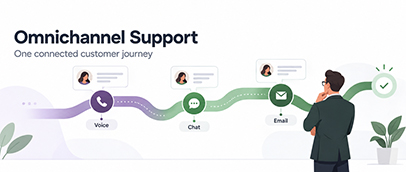
Customers expect the same basic service standards whether they contact a company through its website, email, chat, or telephone. An external agent who relies on generic scripts may sound disconnected from the brand or fail to recognize the customer's previous interactions.
The business should provide examples of appropriate language, explanations of its brand values, and guidance on how to handle frustrated customers without making promises the company cannot keep.
Agents Cannot Resolve the Problem
Some customer issues require more than a prepared answer. An agent may need access to order information, clarification from another department, or authorization to offer an exception.
If the external team has no clear route to obtain that information, customers experience delays and repeated handoffs. Businesses should distinguish between decisions agents can make independently and those requiring internal approval.
Different Channels Give Different Answers
A customer might receive one answer by email and another through live chat because the teams use outdated policies or separate knowledge resources.
A shared, maintained knowledge base helps reduce these inconsistencies. Policy changes should be communicated to every relevant team, and outdated guidance should be removed rather than left alongside the latest version.
A Real Case: Efficiency Without Losing Accuracy

A published case involving a food delivery platform illustrates the challenge of improving contact center performance while protecting order accuracy.
The platform's customer care operation was struggling with interaction volumes that affected customer experience and quality standards. Its service provider introduced changes to call handling, performance management, and team deployment.
The reported results included a 12% reduction in average handling time and 98% order accuracy throughout the transition period.
These figures do not establish that every outsourced support program will produce similar results. However, they illustrate an important distinction: operational efficiency and transaction accuracy can be measured together rather than treated as competing priorities.
For businesses outsourcing customer support, the lesson is to define quality requirements alongside speed targets. In an order-related interaction, for example, a short conversation is not successful if the agent records the wrong item, gives incorrect delivery information, or leaves the customer without a clear next step.
Common Risks That Hurt Outsourced Customer Experience
Even with solid workflows in place, two additional real-world risks can erode customer experience for outsourced support.
Over-reliance on AI automation is one frequent pitfall. Some vendors lean heavily on bots to cut operational costs, routing emotionally-charged or complex cases to automated workflows that cannot fully address customer frustration. AI works best for straightforward inquiries; complicated complaints and nuanced issues still require human judgment.
High agent turnover at the outsourcing vendor creates a second risk. Constant team churn means product knowledge, brand context, and process familiarity must be re-built repeatedly. Without continuous refresh training, service quality can drift over time.
Outsourced customer-experience projects stand the highest chance of success when a business invests in up-to-date documentation, ongoing quality assurance, and well-defined authority boundaries for external agents. Outsourcing works poorly when treated as a “set-it-and-forget-it” solution.
Set Rules That Protect Customer Trust
Give Agents the Right Information
External agents need current product details, order policies, refund rules, troubleshooting guidance, and approved explanations for common problems.
Training should also cover what agents must not promise. A clear boundary can be more useful than a long script when a customer asks for an exception.
Make Escalation Easy
Escalation should be based on the issue, not on whether an agent feels comfortable handling it. Define which cases require internal review, what evidence must accompany a handoff, and who owns the next action.
Customers should not have to restart the conversation simply because their issue moves between teams.
Review Real Interactions
Use a sample of calls, chats, and emails to assess accuracy, tone, policy compliance, and resolution quality. Review customer complaints and repeat contacts to identify problems that satisfaction surveys alone may miss.
When the same question repeatedly reaches a supervisor, the underlying issue may be unclear documentation or a missing decision rule rather than inadequate agent effort.
Measure Quality Beyond Response Time
|
Metric
|
What it helps identify
|
|
First contact resolution
|
Whether customers receive a complete answer
|
|
Customer satisfaction
|
How customers perceive the support experience
|
|
Repeat contact rate
|
Whether unresolved issues bring customers back
|
|
Quality assurance score
|
Whether agents follow standards and provide accurate information
|
|
Response time
|
How quickly customers receive an initial reply
|
|
Escalation rate
|
Whether agents have the knowledge and authority to handle their work
|
These metrics should be interpreted together. A high escalation rate might indicate insufficient training, but it could also reflect a sensible policy that reserves sensitive decisions for internal specialists.
Likewise, customer satisfaction scores need context. A customer may be unhappy about a delayed shipment even when the agent handled the inquiry correctly. Reviewing the interaction alongside the underlying operational problem provides a more useful picture.
Decide What to Outsource and What to Retain
Not every customer interaction needs to be handled by the same team.
Routine questions, standard order updates, and common product inquiries may be suitable for an external support team. Complex complaints, sensitive cases, and decisions requiring specialized authority may need internal involvement.
The appropriate division depends on the company's products, policies, and risk tolerance. The objective is to give external agents enough information and authority to resolve routine issues while preserving a reliable route for exceptional cases.
Related reading: How to Scale Omnichannel Customer Support: A Strategic Guide for 2026
Evaluating Vendors for Consistent Customer Experience
When comparing potential outsourcing partners, focus beyond raw interaction throughput.
Examine how providers train agents, maintain knowledge resources, monitor ongoing service quality, and coordinate cross-team escalations. Ask vendors how they mitigate risks including agent turnover and over-automation. Confirm their reporting framework delivers visibility into resolution quality, not just speed-based operational numbers.
Frequently Asked Questions
Does outsourced customer support reduce customer satisfaction?
Not automatically. Satisfaction can decline when agents lack product knowledge, provide inconsistent answers, or cannot resolve problems. Clear training, accurate information, and appropriate decision-making authority help reduce these risks.
How can a company maintain its brand voice?
Provide practical writing and conversation guidelines, sample responses, tone-of-voice examples, and clear rules for sensitive situations. Regularly review real customer interactions to check whether the guidance is being applied consistently.
Should outsourced agents have access to customer data?
Agents should receive only the access necessary to perform their assigned tasks. Businesses should establish appropriate permissions, security requirements, privacy procedures, and rules for handling sensitive information before operations begin.
Which KPI matters most for customer experience?
No single metric captures the entire experience. First contact resolution, customer satisfaction, repeat contact rate, and quality assurance provide complementary information. Response time is useful, but it should not replace measures of accuracy and resolution.
Can AI-powered outsourced support hurt customer experience?
It can, when vendors deploy automation too broadly to cut costs. Bots handle simple inquiries efficiently, but frustrated customers with complex or emotional cases require human agents. The best models combine AI efficiency with human oversight.
What should we do if outsourced CX keeps declining despite training?
Dig into root causes. Check whether knowledge resources are outdated, whether agents lack necessary decision authority, or whether high vendor-side agent turnover erodes performance. Also verify if poor customer experience stems from underlying product or logistics issues rather than support delivery.
Can outsourced support match the CX quality of an in-house team?
Yes, it is achievable. Comparable quality depends on well-defined standards, continuous quality monitoring, up-to-date knowledge bases, and clear escalation workflows. Quality will not happen automatically by contracting an external team.
Final Thoughts
Outsourcing changes who delivers customer support, but customers still judge the business by the experience they receive.
The strongest arrangements combine clear service standards with accurate information, meaningful quality checks, and a reliable escalation process. When external teams are equipped to resolve problems rather than simply close interactions, outsourcing can expand operational capacity without making customer service feel disconnected from the brand.
Ready to Protect Customer Experience While Scaling Support?
Nexlence builds outsourced customer support workflows built around your brand standards, knowledge resources, and escalation rules. Reach out to explore a customer-centric outsourcing model aligned with your business goals.
















 Nexlence
 PREVOUS ARTICLE