“Where’s my order?”
“The tracking says ‘delivered’ but I haven’t received anything.”
“How do I return this item?”
Every day, these questions flood your support channels. And when a flash sale goes viral, a livestream host drives
unexpected orders, or a logistics carrier announces a delay, the volume can multiply by 5x or 10x
within hours.
For ecommerce brands, customer support isn’t a nice-to-have — it directly impacts conversion rates, repeat purchases,
and seller ratings. One mishandled return can lose a loyal customer forever. One poorly resolved
cross-border
dispute can damage your standing on an entire marketplace.
That’s why more and more ecommerce CX leaders are turning to outsourced ecommerce support. But outsourcing doesn’t
mean losing control. A truly reliable ecommerce support model must scale your service without eroding
the brand
experience that customers trust.
What Does Ecommerce Support Include?
To understand the value of ecommerce outsourcing, you first need to see the full scope of what ecommerce support
covers. Unlike traditional industries with a narrow set of enquiries, ecommerce involves a complete
pre- to
post-sales lifecycle:
Order status & tracking — the most frequent enquiry type, covering delivery estimates, shipping
exceptions, and order changes.
Shipping delay management — stalled tracking, failed deliveries, warehouse backlogs, often
accompanied by anxious customers.
Returns, exchanges & refund disputes — wrong size, damaged goods, incorrect items, delayed
refunds — mishandling here is a top source of negative reviews.
Post-sales troubleshooting — technical support for electronics, smart home devices, small
appliances, and other complex products.
Peak-season ticket surges — Singles’ Day, Black Friday, Prime Day, new product launches — short-term
spikes that stress-test any support team.
Marketplace policy & cross-border compliance — varying dispute rules, return policies, tax and
customs requirements across different platforms and countries.
Multilingual, multi-time-zone coverage — cross-border sellers must serve customers speaking
different languages and living in different time zones.
VIP buyer care — differentiated response levels for high-value or high-frequency shoppers.
Each of these scenarios demands a different knowledge base, workflow, and emotional intelligence. That’s why generic
outsourcing solutions often fail in ecommerce — you need a system that can handle all eight scenarios
simultaneously, with agility.
Ecommerce’s Peak Volatility: How AI Solves the “Surge Anxiety”
The single most unique challenge in ecommerce is extreme demand volatility.
During peak sales events, support ticket volumes can spike by 75% or more. A single influencer post,
a platform campaign, or even a sudden logistics disruption can send enquiries soaring from normal
levels to
multiples in a matter of hours. The traditional approach — hiring seasonal staff months in advance,
training them,
and laying them off after the rush — is expensive, inconsistent, and demoralising for teams.
The AI + human combination is purpose-built for this volatility.
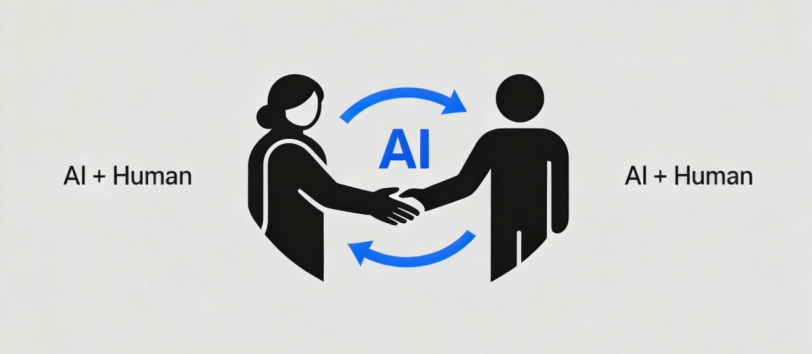
AI handles the “volume” — when ticket surges hit, AI scales instantly to handle routine enquiries
like order tracking, shipping updates, and return instructions — without adding any headcount. A
well-trained AI
agent can automatically absorb over 40% of repetitive tickets during peak periods,
freeing human
agents from being drowned by simple questions.
Humans handle the “complexity” — when an issue requires judgement — such as assigning responsibility
in a return dispute, addressing a VIP customer’s special request, or coordinating with carriers on a
complicated
logistics exception — AI seamlessly hands off the conversation to a skilled human agent. Humans bring
empathy,
critical thinking, and nuanced decision-making; AI brings speed and scale.
Predictive staffing — more advanced AI uses historical data and real-time traffic to forecast demand
spikes, automatically adjusting agent schedules so you always have “just enough” capacity — never
over-staffed,
never under-staffed.
This elastic architecture — “AI takes the first line, humans take the hardest calls” — lets ecommerce brands ride the
peak waves confidently, without getting trapped in the costly hire-and-fire cycle.
How AI-Powered Ecommerce Support Really Works on the Ground
Nexlence operationalises this by embedding artificial intelligence across the entire customer lifecycle — not as a
shallow chatbot layer, but as a predictive engine integrated with expert-led delivery. The X-Force
platform orchestrates AI-assisted case handling, automated quality assurance, and
knowledge base propagation
in real time, so that even during peak sales events, every agent speaks with consistent, updated brand
knowledge.
This matters especially for complex ecommerce scenarios such as cross-border dispute resolution, VIP buyer care, and
after-sales logistics troubleshooting, where context retention across channels prevents repeat contacts
and
frustration.
The approach proved decisive for a leading global cross-border ecommerce platform operating in English, Portuguese,
Spanish, and Russian. To handle inquiries, disputes, and complaints across time zones, Nexlence
deployed a
multilingual CX network spanning more than 15 cities and sustained over a decade of continuous service
delivery,
earning the highest supplier satisfaction ranking on the platform. That longevity was built on a model
that combines
onshore-offshore coordination with elastic workforce scaling, so the client could grow into new markets
without
losing quality or adding management complexity.
Turning Ecommerce Support into a Growth Engine
What makes this model strategically different is the shift from reactive fire-fighting to data-driven operational
intelligence. Behavioural signals from millions of interactions feed back into inventory planning,
market
intelligence, and even product feedback loops, effectively transforming CX from a cost centre into a
growth enabler.
Meanwhile, a dedicated compliance and risk management layer continuously monitors regional privacy regulations,
platform policies, and transaction risks, protecting the brand’s licence to operate in unfamiliar
territories — a
non-negotiable for any enterprise serious about global ecommerce.
For CX heads and operations directors, adopting this kind of partner-driven model doesn’t mean losing visibility; it
means gaining a clear, auditable lens into service quality, customer sentiment, and operational
performance across
every market. When the technology stack, the talent pool, and the governance framework are owned by one
accountable
partner, the leadership team can finally move from micromanaging scripts to shaping high-level
experience strategy.
FAQ
Q: How do we prevent outsourced ecommerce support from diluting our brand voice across languages and
cultures?
A: The first safeguard is a centralised knowledge engine that local teams cannot deviate from without authorisation.
Nexlence embeds a structured knowledge base with role-based access, AI-suggested responses, and
mandatory quality
audits on every interaction, so brand tone, legal disclaimers, and preferred phrasing remain consistent
whether the
agent is in Lima or Manila. Second, localised cultural calibration is built into the workflow:
native-speaking
specialists co-design scripts and escalation paths that respect local etiquette while staying on-brand.
Q: What metrics should we track to know if our ecommerce support partner is truly performing?
A: Beyond the usual service level and average handle time, we recommend focusing on First Contact Resolution (FCR),
Customer Satisfaction (CSAT) segmented by market, and the rate of repeat contacts due to unaddressed
root causes. In
the cross-border ecommerce context, you should also track dispute resolution quality and compliance
audit scores,
because one mishandled refund or data privacy misstep can damage seller standing across an entire
platform.
Q: Can AI handle the nuance of complex ecommerce conversations without sounding robotic?
A: AI here functions as an augmentation layer, not a replacement. The X-Force platform equips agents with real-time
knowledge suggestions, predictive intent routing, and after-call summarisation, so human agents can
focus on
empathy, negotiation, and complex problem-solving. In the case of a global portable power brand, this
AI-powered
workflow drove operational efficiency to a historical high while maintaining customer satisfaction
above 88%. The
outcome is a faster, more accurate service that still feels personal.
Ready to Build Ecommerce Support You Can Actually Trust?
If you’re tired of outsourcing arrangements that feel like a black box — where brand standards drift, data sits in
silos, and quality feels impossible to verify — it’s time for a different partnership model. Nexlence
combines an
AI-driven global CX platform with owned, expert-staffed delivery centres to give you exactly what
enterprise
ecommerce demands: multilingual coverage that stays on-brand, AI-powered quality control that makes
performance
transparent, and a compliance framework that evolves with every market you enter. Let’s design a
tailor-made
ecommerce support operation that scales with your ambitions, not against your values.
Contact our team for a free ecommerce support assessment and a personalised control
framework.














 Nexlence


 PREVOUS ARTICLE