Introduction: Retail Customers Expect One Connected Brand Experience
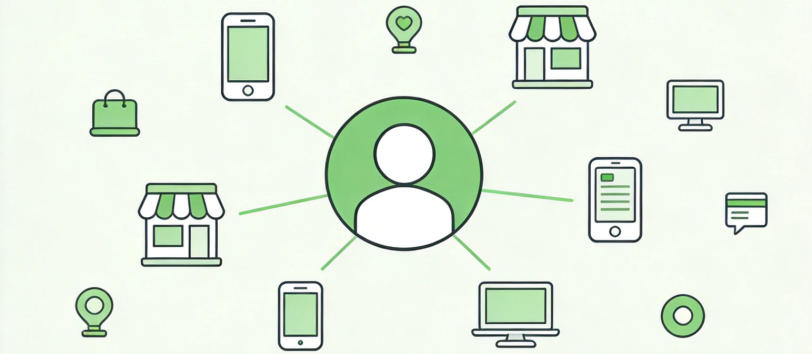
A customer discovers a product through social media, checks reviews on a brand’s website, visits a physical store to
learn more, completes the purchase through an online marketplace, and later contacts customer support through live
chat.
From the customer’s perspective, these are not separate interactions. They are all part of the same relationship with
a brand.
However, many retail companies still manage these touchpoints separately. Their ecommerce teams, store teams, social
media teams, and customer service departments often operate with disconnected systems and different customer
information.
This creates common challenges:
-
Customers need to repeat their questions across different channels
-
Support teams lack complete customer history
-
Online and offline experiences feel inconsistent
-
Brands miss opportunities to personalize customer interactions
As customer expectations continue to rise, retailers need more than multiple communication channels. They need
connected experiences that allow customers to move smoothly between every interaction point.
This is where omnichannel customer experience retail
solutions help businesses create consistent, personalized, and efficient customer journeys.
Why Retail Brands Need Connected Customer Experiences
Customers Do Not Think in Channels — They Think in Journeys
Modern retail customers rarely follow a single purchasing path.
A typical journey may include:
| Customer Journey Stage |
Possible Touchpoints |
| Product discovery |
Social media, advertisements, influencers |
| Product research |
Website, reviews, online communities |
| Purchase |
Ecommerce store, marketplace, physical store |
| Customer support |
Chat, email, phone, social messaging |
| Retention |
Loyalty programs, personalized communication |
The challenge for retailers is not simply providing more channels.
The challenge is ensuring that every channel works together.
When customers switch from one channel to another, they expect brands to understand their previous interactions,
preferences, and purchase history.
Common Retail Customer Experience Challenges
1. Fragmented Customer Data Across Multiple Platforms
Many retailers use different systems for:
-
Online orders
-
Store purchases
-
Customer support
-
Marketing campaigns
-
Loyalty programs
When these systems are disconnected, customer service teams may not have the information they need to provide
effective support.
For example:
A customer purchases a product in-store and later contacts online support about a return. If the support agent cannot
access the purchase history, the customer may need to explain the situation again.
This creates unnecessary frustration and reduces customer satisfaction.
2. Increasing Customer Expectations for Faster Support
Customers today expect quick responses regardless of where they contact a brand.
They may ask questions through:
-
Website chat
-
Social media messages
-
Email
-
Mobile applications
Slow responses can directly impact purchasing decisions.
For retailers, customer support is no longer only a service function. It has become an important part of the overall
shopping experience.
3. Maintaining Consistent Experiences Across Markets
Global retail brands face additional complexity.
Different regions may involve:
-
Different languages
-
Different customer expectations
-
Different communication preferences
-
Different market requirements
A scalable CX strategy must allow brands to provide consistent service while adapting to local customer needs.
What Are Omnichannel Customer Experience Retail Solutions?
For retail businesses, omnichannel customer experience solutions connect customer interactions across different
channels to create one continuous journey.
Unlike a multichannel approach, where businesses simply offer several communication options, an omnichannel strategy
focuses on connecting these interactions.
A successful retail omnichannel solution usually includes:
Unified Customer Support Across Channels
Customers should be able to move between:
-
Website
-
Mobile app
-
Social media
-
Email
-
Voice support
-
Live chat
without losing conversation history or customer context.
This helps support teams provide faster and more personalized assistance.
AI-Powered Customer Experience Management
AI has become an important part of modern retail CX operations.
Retailers can use AI to:
-
Automate repetitive customer requests
-
Analyze customer conversations
-
Identify common issues
-
Improve response efficiency
-
Support customer service teams
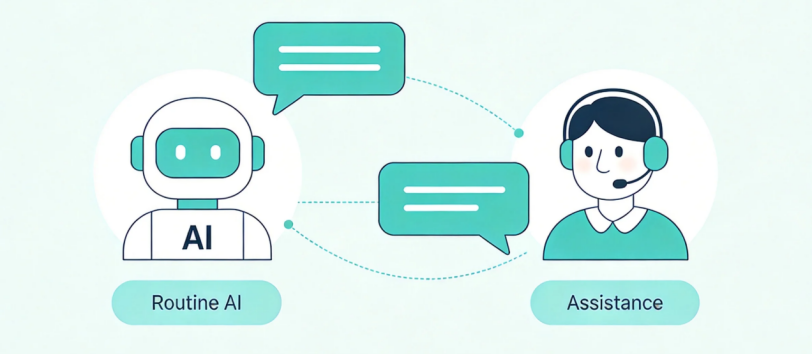
However, AI works best when combined with human expertise.
Complex customer concerns, complaints, and emotional interactions still require trained professionals who can
understand context and provide appropriate solutions.
Personalized Customer Interactions
Customers expect brands to understand their needs.
Connected customer data allows retailers to:
-
Recommend relevant products
-
Provide more accurate support
-
Identify customer preferences
-
Improve loyalty programs
Personalization helps transform individual transactions into long-term customer relationships.
How Retail Businesses Can Build Better Omnichannel Experiences
Step 1: Map the Complete Customer Journey
Retailers should first understand how customers interact with their brand.
Questions to consider:
-
Where do customers discover products?
-
Which channels generate the most questions?
-
Where do customers experience frustration?
-
Which support requests appear repeatedly?
Understanding these patterns helps businesses identify improvement opportunities.
Step 2: Connect Customer Service Operations
A connected CX operation requires alignment between:
-
Customer support teams
-
Ecommerce operations
-
Marketing teams
-
Retail locations
The goal is to ensure every team works with the same customer information.
Step 3: Combine Automation With Human Support
Automation can improve efficiency, but human interaction remains essential.
A balanced approach allows:
AI to handle:
Human teams to manage:
This creates faster and more effective customer experiences.
Step 4: Continuously Improve Through Customer Insights
Every customer interaction provides valuable information.
Retailers can analyze:
-
Customer feedback
-
Support conversations
-
Common complaints
-
Buying behavior
These insights help brands improve products, services, and customer relationships.
How Nexlence Helps Retail Brands Create Connected Customer Experiences
Building a successful omnichannel strategy requires more than technology. Retail businesses also need experienced
teams, operational flexibility, and customer-focused processes.
Nexlence helps businesses
improve customer experience through AI-powered CX solutions, customer support outsourcing, and scalable digital
operations.
AI-Powered CX Solutions
Nexlence integrates AI capabilities into customer experience workflows to help businesses:
-
Improve operational efficiency
-
Automate repetitive interactions
-
Analyze customer conversations
-
Optimize customer service processes
By combining AI technology with human expertise, Nexlence helps brands manage customer interactions more effectively.
Scalable Customer Support Operations
Retail businesses often experience changing support demands during:
-
Product launches
-
Seasonal promotions
-
Market expansion
Nexlence provides flexible customer experience operations that help companies scale support capacity while
maintaining service quality.
Multichannel and Global Customer Experience Support
Modern retail customers interact with brands across many digital touchpoints.
Nexlence supports businesses in managing customer interactions across different channels while helping maintain
consistent brand experiences.
This approach enables retailers to create stronger connections with customers throughout the entire shopping journey.
Benefits of Working With Nexlence for Retail CX
| Retail Challenge |
Nexlence Capability |
| Increasing customer interaction volume |
Scalable CX outsourcing solutions |
| Multiple disconnected channels |
Connected customer experience workflows |
| Need for faster responses |
AI-assisted customer support operations |
| Global customer requirements |
Multilingual CX support |
| Limited internal resources |
Flexible operational support |
Frequently Asked Questions About Omnichannel Customer Experience Retail
What is omnichannel customer experience in retail?
Omnichannel customer experience in retail refers to creating a connected customer journey across online and offline
channels, allowing customers to interact with brands consistently throughout the buying process.
Why is omnichannel CX important for retail businesses?
It helps retailers improve customer satisfaction by providing consistent experiences, faster support, and more
personalized interactions across every customer touchpoint.
What is the difference between multichannel and omnichannel customer experience?
Multichannel means a brand provides multiple communication channels.
Omnichannel connects these channels together so customers can move between them without losing context.
How does AI improve retail customer experience?
AI helps retailers automate routine tasks, analyze customer interactions, and support customer service teams with
faster and more accurate responses.
Should retailers outsource omnichannel customer support?
Outsourcing allows retailers to access specialized CX teams, technology solutions, and scalable operations without
increasing internal complexity.
Conclusion
Retail success today depends on more than offering quality products. Customers expect brands to provide connected,
convenient, and personalized experiences across every interaction.
Effective omnichannel customer experience retail
solutions help businesses connect customer journeys, improve service efficiency, and build stronger long-term
relationships.
Nexlence helps retail brands achieve this goal through AI-powered CX solutions, scalable customer support operations,
and customer-focused digital experience strategies.
Whether you are expanding ecommerce operations, managing growing customer interactions, or looking to improve
consistency across multiple channels, Nexlence can help you create a seamless customer experience that supports both
customer satisfaction and business growth.
Ready to transform disconnected customer interactions into a connected retail experience? Partner with Nexlence to
combine AI-driven technology, expert CX teams, and scalable support solutions that help your brand deliver
better experiences at every customer touchpoint.













 Nexlence


 PREVOUS ARTICLE