When was the last time you bought something online?
After clicking "place order," you probably did a few things: waited for the order confirmation email,
checked the tracking status occasionally, and hoped the package would arrive on time. If everything went smoothly,
you thought "not bad." But if the tracking didn't update for days, the package arrived three days
late, or the product didn't match the description—your feeling would be completely different.
Every single step a customer goes through after making a purchase makes up what we call the "Post
Purchase Customer Experience."
It starts the moment a customer clicks the "buy" button and includes order confirmation, tracking and
shipping, delivery, after-sales support, returns and exchanges, and ongoing communication after delivery. This
experience often lasts much longer than most brands realize—and it determines whether a customer will ever come
back.
Too many brands drop the ball right at this final step.
Why Post-Purchase Customer Experience Matters More Than You Think
Brands spend fortunes bringing people in, only to lose them at the very last step. It sounds absurd, but it happens
every day.
According to Klaviyo's 2025 Consumer Marketing Report, one in five consumers will stop buying from a brand
after just one negative experience. Zendesk found that nearly three-quarters of consumers will switch to a
competitor after a single bad service interaction.
Even more telling: Salesforce reports that 90% of consumers say post-purchase experience is just as important as the product quality itself.
What these numbers tell us is clear: product quality and marketing get customers through the door. Post-purchase
experience is what keeps them there.
There's another overlooked reality: repeat customers spend three times more than first-time buyers. That
means keeping an existing customer happy is far more cost-effective than acquiring a new one—especially as customer
acquisition costs keep rising.
There's also a psychological factor. Narvar's 2025 Post-Purchase Report found that two-thirds of
consumers feel anxious after clicking "buy." Theft risks, delivery failures, poor
communication—these uncertainties make the post-purchase phase one of the biggest friction points in the entire
customer journey. 74% of consumers experienced delivery delays in the past year, and 86% encountered at least one
problem.
When customers are waiting in anxiety, and your brand fails to give them reassurance and transparency during this
phase, the relationship is essentially over.
The Core Components of Post-Purchase Customer Experience
A complete post-purchase customer experience typically includes these key stages:
Order Confirmation and Immediate Reassurance
The first email or message a customer receives after ordering sets the tone for their entire post-purchase journey.
Good practice: send an immediate confirmation that clearly outlines the next steps and timeline—letting the customer
know "we've got your order, and here's what happens next."
Tracking and Transparent Communication
This is where customers feel the most anxious. They need to know where their package is and when it will arrive. If
tracking information is unclear or updates are delayed, customers start worrying—"is something wrong?"
Branded tracking pages—rather than dumping customers onto a third-party courier site full of
ads—significantly reduce this anxiety. Strategic post-purchase communication can reduce support tickets by 40-60%
and increase repeat purchase rates by 23-31%.
Delivery Experience
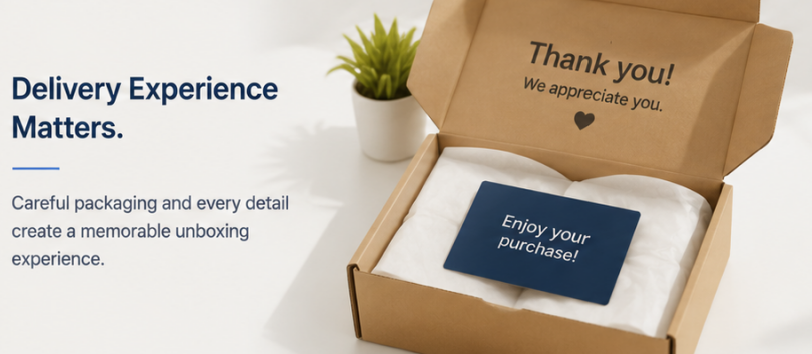
The moment a package arrives is the most direct physical interaction between a brand and its
customer. Is the packaging intact? Does the product match expectations? How does the unboxing feel? These seemingly
minor details form the customer's final impression of your brand.
After-Sales Support and Returns
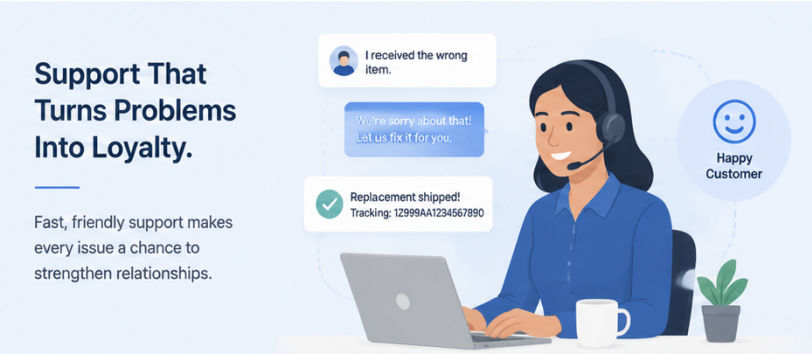
Problems will happen—delayed packages, defective products, wrong items sent. How quickly and smoothly
customers can get help determines whether they'll give your brand another chance. 76% of
consumers will not repurchase after a poor returns experience.
Post-Delivery Ongoing Communication
Many brands go completely silent after the package is delivered. But delivery isn't the end—it's the
starting point for the next purchase. Smart brands continue engaging after delivery—asking for feedback, sharing
product tips, offering personalised recommendations.
Common Pitfalls in Post-Purchase Experience
Knowing where things go wrong is the first step to fixing them. Here are the most common mistakes brands make in the
post-purchase phase:
Communication black holes: Customers get one confirmation message and then hear nothing until the
package ships—days of silence in between.
Unclear tracking: Customers are sent to a third-party courier page with cryptic tracking codes, no
estimated delivery date, no branding, and nothing that makes them feel reassured.
Complicated returns: Want to return something? First, find the returns policy hidden somewhere on
the site, then print a label, then contact customer service—every step drains the customer's patience.
Slow post-purchase support: A package goes missing and the customer can't find anyone to ask—or
when they do, the agent can't see their order details and they have to start from scratch.
Silence after delivery: Package delivered, brand disappears. No thank-you, no follow-up, nothing
that tells the customer "this brand actually cares about me."
How to Choose a Post-Purchase Customer Experience Partner
If your brand is considering optimising post-purchase experience, here are the key dimensions to evaluate:
1. Omnichannel coverage
Customers may reach out through email, chat, phone, or social media. Post-purchase support needs to work seamlessly
across these channels—so customers don't have to repeat themselves.
2. Multilingual and global delivery capability
If your customers are in different countries, your partner needs to provide local-language, local-time-zone support.
3. The right balance of AI and human touch
AI can handle high-volume routine inquiries (like "where's my order"), letting human agents focus on
complex issues. But AI can't replace human warmth—especially when customers are frustrated.
4. Unified data and customer visibility
Agents should see the complete picture—order history, communication records, delivery status—in one place, not piece
together information from different systems.
What Nexlence Brings to Your Post-Purchase Experience
Nexlence provides
post-purchase customer experience support specifically designed around each critical moment of the buyer's
journey. From the moment an order is placed, our AI system proactively sends order confirmations and delivery status
updates—alerting customers to delays before they have to ask. After delivery, our global support team, powered by
AI, quickly accesses complete order information to resolve returns and issues in one interaction—customers never
repeat themselves. Delivery isn't the end; we help brands design meaningful follow-up engagement—personalised
tips and recommendations based on what the customer actually bought—sending a clear signal: we remember you, and we
care about how you're using what you bought.
With over 5,000 professionals across multiple delivery centres worldwide, we provide local-language, local-time-zone
support wherever your customers are. And we don't just sell and walk away—we work with you to map the entire
journey from order to delivery to follow-up, identify where customers get stuck, design actionable improvements, and
keep optimising based on real data. Our goal is simple: make your brand the first one customers think of when they
need what you offer again.
Frequently Asked Questions
Q: What's the difference between post-purchase customer experience and customer service?
Customer service is typically reactive—the customer has a problem and comes to you. Post-purchase experience is
systematic management—from the moment of purchase through delivery, returns, and follow-up—all proactively designed
and managed.
Q: Do small brands need to worry about post-purchase experience?
Absolutely. Smaller brands often rely more on word-of-mouth and repeat business. One bad post-purchase experience can
hurt a small brand more than a large one—because you have fewer customers to lose.
Q: Can AI handle post-purchase issues?
It can handle some. AI is great for standard, high-frequency questions—order status, tracking queries, return
policies. But when situations get complex or customers are emotional, human agents are still essential.
Make Every Purchase the Start of the Next One
Too many brands treat "checkout" as the finish line. Order complete, marketing done—everything else is left
to logistics and customer service.
But the brands that truly last understand: placing an order is where the relationship begins.
Post-purchase customer experience is ultimately about answering the question every customer is quietly asking:
"Did I make the right choice?" Every action you take in this phase—timely confirmations, clear tracking,
smooth returns, genuine follow-up—helps your customer answer "yes."
The better you answer that question, the deeper the trust. The deeper the trust, the more naturally repeat purchases
follow.
If you want your customers—from the moment they click "buy" through delivery and beyond—to feel valued,
remembered, and cared for, Nexlence can help you get there.
Let's talk about your current post-purchase journey and where it hurts most. No contracts upfront—let us
first help you diagnose the fastest wins. Come to us with your challenges, and we'll show you how to turn
every purchase into a reason for your customers to come back.













 Nexlence


 PREVOUS ARTICLE