Automation can answer some questions instantly.
But not every customer wants—or needs—an automated answer.
When an order has gone wrong, a customer is frustrated, or the problem does not fit a standard workflow, the ability to speak with a real person can make a significant difference.
This creates a growing operational challenge for businesses: how do you provide responsive human support without continuously expanding internal staffing?
For many companies, customer service outsourcing services provide one answer. Live customer service outsourcing allows businesses to add real-time human support across chat, voice, or other live channels while avoiding the need to build every aspect of that operation internally.
But why outsource live customer support specifically?
Live Support Is Operationally Difficult to Scale
Unlike email, live customer service requires immediate availability.
A customer using live chat expects a response while they are still on the website or app. A phone customer expects someone to answer within a reasonable period. If demand suddenly increases, there is less opportunity to simply work through a backlog later.
This makes workforce planning more difficult.
A business must have enough agents available when customers arrive, but customer demand does not always follow a predictable pattern.
Building an internal team capable of covering every hour and every peak period can require substantial recruitment, scheduling, training, and management.
Live customer service outsourcing gives businesses access to additional operational capacity without requiring them to create every element of that structure themselves.
Customers Often Need Human Help at the Most Important Moments
Live support is frequently used when a customer needs immediate clarification.
They may be deciding whether to complete a purchase, experiencing a problem during checkout, or trying to resolve an urgent issue after a transaction.
In these situations, a delayed response can change the customer experience significantly.
The value of live customer service is therefore not simply that the conversation happens in real time.
It is that a trained person can understand the customer's situation, ask follow-up questions, and respond to issues that do not always fit a predefined script.
For businesses, the challenge is maintaining that quality as customer volume increases.
Why Not Handle All Live Support Internally?
Some businesses should.
If live interactions are highly specialized and closely connected to internal expertise, keeping them entirely in-house may be appropriate.
However, an internal-only model can become difficult when the business needs longer service hours, additional languages, or greater capacity.
A company expanding internationally, for example, may need live customer support when its primary office is closed. Building internal teams around every time zone can quickly increase operational complexity.
Outsourcing can provide a more flexible way to extend coverage while maintaining defined service standards.
The key is not simply finding agents who are available.
It is building an operation that understands how your business wants customers to be supported.
Live Customer Service Outsourcing Can Support 24/7 Operations

Customers do not always contact a business during the same hours.
This becomes particularly important for global companies serving customers across multiple regions.
A customer in one market may begin a conversation when the company's internal team in another market has finished its workday.
Live customer service outsourcing can help create broader operational coverage by using teams capable of supporting customers across different time zones.
Nexlence's global customer contact services include omnichannel support and 24/7 global delivery, combining AI-powered capabilities with human expertise for customer interactions across markets.
For businesses, this can reduce the need to build separate internal support structures for every market they serve.
Human Support Still Matters in an AI-Driven Operation
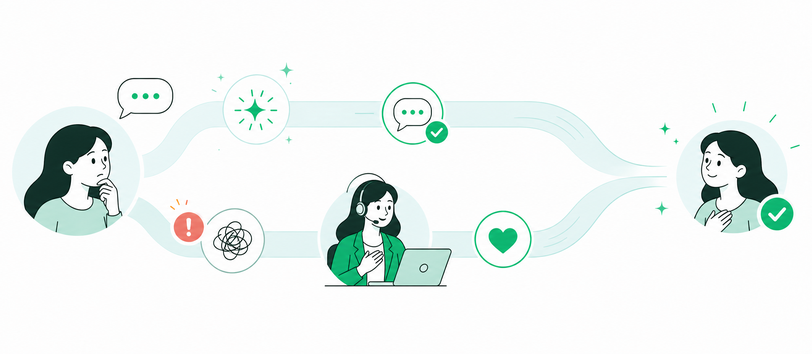
The growth of automation does not eliminate the need for live agents.
Instead, it changes the type of work agents handle.
Routine requests can increasingly be supported by automated systems, while live agents focus on interactions where customers need additional help.
This can include unusual problems, complaints, exceptions, or situations where the customer needs reassurance from a real person.
A strong support model therefore does not force every interaction through either automation or human service.
It determines which route is most appropriate.
How Outsourced Live Support Can Maintain Brand Consistency
One concern with live customer service outsourcing is that agents may sound disconnected from the brand.
This risk is real if outsourcing is treated only as a staffing transaction.
Live agents need to understand more than a basic response script. They need knowledge of the business, the communication style expected by customers, and the limits of their authority.
Clear escalation procedures are equally important.
An agent should know when a problem can be resolved immediately and when it needs additional involvement from another team.
With the right training and quality management, an outsourced live support operation can function as an extension of the business rather than a separate customer-facing organization.
Related guide:Call Center BPO Services: A Guide to Choosing the Right Customer Support Partner
Live Support Can Be Used Alongside Internal Teams
Outsourcing does not require businesses to transfer every live conversation.
Some companies may use external teams to handle overflow demand. Others may need support during evenings, weekends, or specific market hours.
Another model is to divide responsibilities based on inquiry complexity.
| Live Support Model |
When It Makes Sense |
How It Works |
| Overflow Support |
During peak demand |
An outsourced team handles additional conversations when internal capacity is limited. |
| After-Hours Support |
Extended service coverage |
External agents provide live support outside the internal team's normal working hours. |
| Multilingual Support |
International customer service |
Outsourced teams provide live assistance in languages that may be difficult to staff internally. |
| Routine Inquiry Support |
High-volume, predictable questions |
External agents handle common live conversations while internal teams focus on more complex cases. |
| Hybrid Support |
Mixed customer service needs |
Outsourced agents manage defined interactions while internal specialists handle escalations and sensitive cases. |
This flexibility is one reason live customer service outsourcing can be particularly useful for growing businesses.
The model can be designed around the operational gap rather than replacing an existing team unnecessarily.
What Makes Live Customer Service Outsourcing Successful?

The quality of live support depends heavily on preparation.
Agents need current information, clear service standards, and reliable escalation paths. Managers need visibility into how conversations are being handled.
Businesses should also consider the customer journey as a whole.
A customer may interact with automation before speaking with a live agent or move from social media to chat and then to another channel.
If those interactions are disconnected, customers may need to repeat information multiple times.
A more connected operating model allows teams to manage the customer conversation rather than treating each individual contact as completely separate.
Is Live Customer Service Outsourcing Right for Your Business?
It may be valuable if customers require immediate assistance and your internal team is struggling to provide sufficient availability.
This could result from rapid growth, international expansion, seasonal demand, or the need for broader service hours.
However, the objective should not simply be to add more people to answer conversations.
The objective is to build a live support operation that gives customers access to human assistance when it creates the greatest value.
FAQ
What is live customer service outsourcing?
Live customer service outsourcing involves working with an external provider to manage real-time customer interactions, such as live chat, voice support, or other immediate communication channels.
Why do companies outsource live customer support?
Companies may outsource to expand service hours, manage peak demand, support multiple markets, add language coverage, or increase capacity without building a larger internal operation.
Can outsourced agents provide 24/7 live customer support?
Depending on the provider's delivery model and geographic coverage, outsourced operations can help businesses extend live support across different time zones and service hours.
Can AI and live customer service work together?
Yes. Automation can support routine interactions and workflows, while live human agents handle issues requiring judgment, empathy, or more complex problem-solving.
Conclusion
Live customer service remains important because some customer problems cannot be reduced to a standard automated workflow.
Businesses outsource live customer support services to gain greater capacity, extend coverage, support customers across markets, and create more flexibility as demand changes.
The strongest approach combines responsive human service with automation where appropriate, ensuring customers can move efficiently through the support journey without losing access to meaningful human help.














 Nexlence
 PREVOUS ARTICLE