We use cookies to improve our site. By using or further navigating our site you accept our cookie policy.Please click here to check the Privacy Policy and Cookie Policy.



Smart
Empowerment

2026-11-11
 Nexlence
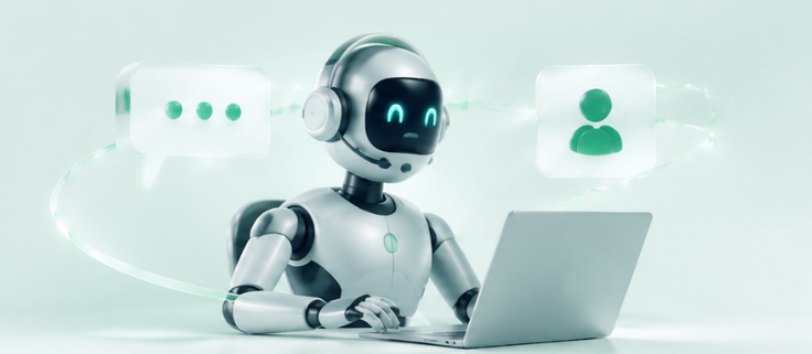
AI-driven outsourced customer support companies are changing global customer experience by combining automated service workflows with trained human agents. AI can handle repetitive questions, identify customer intent, retrieve relevant information, and route requests. Human specialists take over complex complaints, technical product questions, and situations that require judgment or empathy.
For global businesses, this model offers more than faster responses. It helps maintain consistent service across languages, markets, and customer channels while allowing support capacity to adjust to changing demand.
The difference between a traditional outsourcing provider and an AI-driven CX partner is how well technology, people, and daily service operations work together.
A company may have a reliable customer service team in its home market, but expanding internationally creates a different set of problems.
Customers expect support in their preferred languages and across channels such as email, live chat, phone, and social media. Meanwhile, product information, delivery policies, return procedures, and local customer expectations can vary significantly between markets.
Consider a consumer electronics brand entering Europe and Southeast Asia. Its support team may receive questions about product setup, warranty coverage, shipping delays, and replacement parts at the same time. A single centralized team may struggle to respond quickly while maintaining accurate, localized answers.
Three operational problems often emerge:
Growing inquiry volumes: Product launches, seasonal campaigns, and regional promotions can create sudden increases in customer requests. Fixed in-house teams may not have enough capacity to handle these peaks.
Inconsistent answers across markets: Different teams may interpret warranty policies, product information, or refund procedures differently. Customers can receive conflicting answers depending on the channel or country.
Rising service costs: Hiring, training, and managing multilingual teams requires ongoing investment. As the number of markets grows, maintaining consistent service becomes increasingly difficult.
These challenges explain why businesses are looking beyond traditional call center outsourcing. They need providers that can combine flexible human operations with AI-assisted service delivery.
AI is most valuable when it supports the entire customer service workflow rather than simply replacing an agent with a chatbot.
For example, when a customer asks why a delayed order has not arrived, an AI system can identify the request, retrieve the relevant order information, and provide an update if the information is available. If the customer reports a missing package or requests compensation, the case can be transferred to a human agent with the conversation history attached.
This reduces repetitive work without forcing customers through unnecessary automated responses.
| Customer service task | AI's role | Human agent's role |
|---|---|---|
| Order and delivery inquiries | Retrieves order information and provides routine updates | Handles missing, delayed, or disputed deliveries |
| Product questions | Searches approved product knowledge | Explains complex features and unusual use cases |
| Returns and refunds | Identifies request types and checks policy conditions | Reviews exceptions and handles complaints |
| Multilingual support | Assists with translation and knowledge retrieval | Provides localized communication and cultural understanding |
| Quality management | Monitors interactions and identifies potential issues | Reviews sensitive cases and improves service procedures |
The important point is that automation should not become another barrier between customers and support teams. A mature operation defines which requests can be automated, when human intervention is required, and how customer context is preserved during escalation.
Many customer inquiries follow predictable patterns. Customers ask about delivery status, payment confirmation, account access, product availability, or basic usage instructions.
AI agents can help manage these requests by identifying intent, retrieving information from an approved knowledge base, and responding through supported channels. This allows human agents to spend less time searching for routine information.
However, automation should have clear boundaries. A chatbot should not confidently provide an answer when product information is incomplete or a customer's situation falls outside standard procedures.
Some customer interactions require more than information retrieval.
A customer disputing a warranty decision may need an explanation of the policy and a review of the purchase history. A traveler whose flight has been canceled may need help understanding alternative arrangements. A customer reporting a safety concern about a home battery system may require careful escalation rather than an automated response.
Human agents provide judgment, communication skills, and case ownership in these situations.
The strongest AI-enabled model is therefore not fully automated customer service. It is a structured division of work between AI and people.
The value of AI-enabled customer support becomes clearer when viewed through specific industry challenges. Different products and customer journeys require different service workflows.
Airline and OTA customer service teams face unpredictable inquiry spikes during flight delays, cancellations, schedule changes, and severe weather.
For example, when a flight is canceled, hundreds of passengers may contact support within a short period. Most need similar information, but their actual needs can differ: some want a refund, others need rebooking, and some require assistance with connecting flights or accommodation.
AI can help identify the disruption-related inquiry, retrieve updated flight information, and guide passengers through standard procedures. Human agents can focus on complicated itineraries, urgent complaints, and cases involving special assistance.
For airlines and travel platforms, the objective is not simply to reduce response time. It is to prevent a disruption from becoming a poor customer experience across multiple touchpoints.
Home battery and residential energy storage manufacturers face a different challenge. Their customer support does not end when a product is delivered.
Customers may ask about installation preparation, app connectivity, charging behavior, battery status, warranty coverage, or system alerts. Some questions are straightforward, while others require product knowledge and technical escalation.
An AI-assisted support workflow can classify incoming requests, retrieve approved troubleshooting guidance, and collect relevant product information before an agent takes over.
For instance, if a customer reports that a battery system is not communicating with its monitoring app, the initial workflow can gather the device model, app version, and error message. A trained specialist can then review the information and determine the appropriate next step.
This approach helps manufacturers organize after-sales support without treating every inquiry as a completely new case.
Smart hardware brands often sell products across multiple markets. A single product may generate questions about setup, Wi-Fi connectivity, firmware updates, accessories, returns, and warranty claims.
A robot vacuum manufacturer, for example, may receive repeated questions about mapping failures or charging problems. An AI system can retrieve approved product instructions and guide customers through basic checks. More complicated cases can be transferred to agents familiar with the product range.
For international brands, multilingual support is equally important. Directly translating an answer does not always produce a useful customer experience. Agents need to understand local communication habits, product terminology, and market-specific service policies.
AI-assisted knowledge management combined with localized human support can help brands maintain more consistent answers across regions.
Not every outsourcing provider has the operational capabilities required for AI-driven global CX. Businesses should look beyond claims about chatbots or automation and examine how technology is used in actual service delivery.
A provider should have clear rules for automated responses, human escalation, and complex case ownership. AI should support agents with knowledge retrieval and workflow assistance rather than operate without appropriate oversight.
Global brands need more than translated scripts. They need teams that understand local language use, customer expectations, and market-specific service requirements.
Customers may begin a conversation on social media and continue it through live chat or email. A capable provider should support consistent service across voice, chat, social media, and other relevant channels.
Customer inquiry volumes can change with product launches, seasonal promotions, and regional expansion. A provider with an established delivery network can help businesses extend coverage across time zones and adjust operational capacity.
AI-assisted quality checks, structured knowledge bases, and performance monitoring help identify inconsistent answers and recurring customer problems. Businesses should also understand how the provider reviews exceptions and updates service procedures.
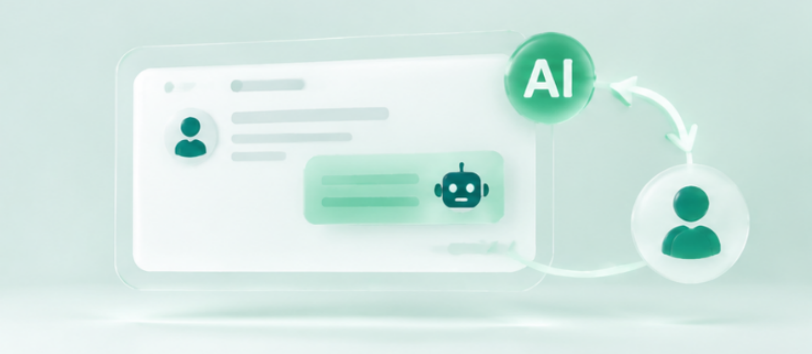
For businesses expanding across multiple markets, the challenge is not simply finding more customer service agents. It is building an operation that can maintain service quality while handling different languages, channels, and customer expectations.
Nexlence combines AI-powered customer experience capabilities with global service delivery and human expertise.
Its digital CX operations bring together several capabilities:
X-Force AI Platform: Nexlence's X-Force platform supports AI agent orchestration, knowledge management, automated quality assurance, and operational monitoring. It helps connect customer interactions with the information and workflows needed to manage service delivery.
Global Service Network: Nexlence operates across more than 20 delivery centers, combining centralized management with localized execution. This supports brands that need customer service coverage across different regions and time zones.
Multilingual and Omnichannel Support: Its customer contact services cover voice, chat, social media, and other customer touchpoints, with multilingual support for international operations.
Industry-Specific Service Experience: Nexlence has supported businesses in cross-border e-commerce, portable power, and intelligent cleaning robotics. These projects involve different customer journeys, from order inquiries and disputes to product questions and after-sales support.
Its published project results include customer satisfaction above 88% for a global portable power brand. For an intelligent cleaning robot brand, Nexlence reports CSAT above 90% and a 25% improvement in First Contact Resolution (FCR).
These results illustrate why AI capability needs to be supported by product knowledge, trained teams, and ongoing service quality management.
For more details on how businesses can structure and manage outsourced customer service operations, explore Nexlence's guide to customer service outsourcing services.
Before selecting a provider, businesses should examine how its technology and service teams work together in real operating conditions.
| Evaluation area | Questions to ask |
|---|---|
| AI capabilities | Which inquiry types can AI handle, and when does a human agent take over? |
| Knowledge management | How are product information, policies, and service updates maintained? |
| Language coverage | Can the provider support the languages and markets required for expansion? |
| Channel coverage | Can customers receive consistent support across voice, chat, and social media? |
| Quality control | How are response accuracy, escalation quality, CSAT, and FCR monitored? |
| Scalability | Can the operation adjust staffing and service coverage during demand peaks? |
A useful evaluation method is to test the provider with real customer scenarios rather than relying only on a presentation.
For example, give the provider a routine delivery inquiry, a complicated warranty dispute, and a product troubleshooting request. Observe whether the AI identifies the correct request, whether the human handoff preserves context, and whether the final response follows the company's service policies.
This reveals far more about operational readiness than a general claim of being AI-powered.
Related reading: AI Driven Customer Experiences: How AI Is Transforming the Future of Customer Experience
Yes. AI can assist with translation, knowledge retrieval, and request classification, while localized human agents handle conversations that require cultural understanding or more complex communication. Businesses should confirm the provider's actual language coverage and the availability of human support in each target market.
AI can help with basic product questions, troubleshooting guidance, warranty information, and case classification. However, issues involving safety, hardware faults, installation complexity, or uncertain product conditions should have clear escalation procedures and access to qualified specialists.
Common indicators include Customer Satisfaction (CSAT), First Contact Resolution (FCR), average response time, resolution time, escalation rate, and quality scores. Businesses should also monitor whether AI responses are accurate and whether human agents receive enough context to resolve escalated cases.
No. AI can reduce repetitive work and help agents access information more efficiently, but human specialists remain important for complaints, exceptions, complex product questions, and sensitive customer situations. The value comes from assigning each task to the most suitable resource.
As businesses expand into new markets, customer support becomes increasingly difficult to manage through disconnected teams and manual workflows.
AI can improve response efficiency, but long-term CX performance still depends on accurate knowledge, reliable escalation, multilingual communication, and capable human teams.
Nexlence combines AI-powered CX operations with a global delivery network to help brands manage customer interactions across markets and channels.
Explore Nexlence's Digital Customer Experience Services to see how AI and human expertise can support your global customer service operations.










 PREVOUS ARTICLE