We use cookies to improve our site. By using or further navigating our site you accept our cookie policy.Please click here to check the Privacy Policy and Cookie Policy.



Smart
Empowerment

2026-09-11
 Nexlence

For platforms such as TikTok, Douyin, and Kuaishou, customer support is no longer limited to answering basic account questions. Users and creators interact with these platforms through short videos, livestreams, comments, direct messages, creator tools, monetization programs, and social commerce features. As platform communities grow, the volume and complexity of support requests grow with them.
A user may need help recovering an account, reporting a problem, understanding why content was removed, or resolving a payment issue. Creators may need support with content distribution, livestream functions, monetization, account restrictions, or platform policies. Some cases can be resolved instantly with AI, while others require human judgment and deeper investigation.
This makes AI + expert human support a practical model for large-scale social media customer support.
Social media customer support refers to the services that help users, creators, merchants, and other platform participants resolve questions and problems across social and digital entertainment platforms.
For short-video platforms, support can cover account access, content and community issues, livestreaming, creator services, monetization, payments, reporting, technical problems, and other platform-related inquiries.
The support environment is also highly interactive. TikTok, for example, provides direct messaging and comment functions that allow users to communicate around content, while its platform policies cover areas such as comments, direct messages, monetization, and content restrictions.
For platforms operating at massive scale, managing these interactions requires more than a traditional call center.
The first challenge is volume.
Millions of users can interact with a platform every day, creating a constant stream of questions, complaints, reports, and requests. Traffic can increase rapidly during major events, viral trends, livestream campaigns, or product launches. A support operation that depends entirely on human agents can struggle to maintain response speed during these peaks.
The second challenge is complexity.
A simple question such as "How do I change my account settings?" can often be answered automatically. But a complaint about a suspended account, removed video, restricted livestream, failed monetization payment, or disputed content decision may require the support team to understand the user's history and the platform's policies before responding.
The third challenge is multilingual and local support.
Global platforms need to support users across different languages, markets, cultures, and regulatory environments. A response that works for one market may not be appropriate in another. Local knowledge therefore becomes important when handling sensitive complaints, creator issues, and policy-related cases.
The fourth challenge is creator experience.
Creators are not simply users. Their accounts, content, livestreams, audiences, and monetization activities can directly affect the platform's ecosystem. When creators encounter problems, slow or inaccurate support can affect both creator satisfaction and platform engagement.
AI can significantly improve customer support efficiency, but large social platforms cannot reasonably rely on automation for every interaction.
AI is highly effective when the problem is repetitive, predictable, and supported by clear knowledge.
For example, AI can help identify the intent of a user inquiry, retrieve relevant knowledge, classify tickets, recommend responses, summarize conversations, and route cases to the appropriate team.
It can also process large numbers of interactions simultaneously, helping platforms reduce waiting times when support demand increases.
However, some cases require context and judgment.
Consider a creator who believes their account has been incorrectly restricted. The issue may involve several previous interactions, content decisions, policy requirements, and account-specific circumstances. Simply generating a standard response may not resolve the problem.
This is where expert human support becomes essential.
Human specialists provide something automation cannot fully replicate: contextual judgment.
Experienced support teams can investigate complex cases, understand user sentiment, identify unusual situations, and determine when an issue requires escalation.
This is especially important for cases involving account restrictions, creator disputes, monetization problems, sensitive complaints, or situations where the correct response depends on multiple factors.
Human agents can also adapt their communication style to the situation. A frustrated creator may need a different response from a user asking a simple technical question. A high-priority complaint may require escalation rather than another automated answer.
For international platforms, local experts can also bring knowledge of language, cultural expectations, and market-specific service requirements.
The result is not simply "human support with AI tools." It is a more structured operating model in which technology handles scale while specialists handle complexity.

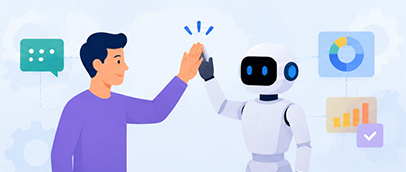
The strongest approach is to combine the strengths of both.
AI can handle the speed, scale, classification, and repetitive work, while human specialists provide judgment, empathy, investigation, and escalation.
A typical workflow can begin with AI identifying the intent and urgency of an incoming request. Straightforward questions can be resolved through automated assistance or guided workflows. More complicated cases can then be routed to specialized agents with the relevant knowledge and context.
For example, a platform may receive thousands of daily questions related to account access. AI can classify these inquiries and resolve standard cases automatically. If the system identifies a potential account-security issue or an unusual access problem, the case can be escalated to a trained specialist.
The same model can be applied to creator support, livestream issues, monetization questions, content-related complaints, and other high-volume support categories.
This allows platforms to avoid choosing between automation and human service. Instead, they can use each where it performs best.
For TikTok, Douyin, Kuaishou, and similar platforms, outsourced support can be structured around the full user and creator journey.
Support teams can handle account access questions, profile issues, platform functions, reporting processes, and common technical problems. AI-assisted classification can help identify the type of issue quickly and route more complicated cases to the right specialists.
Creator support requires deeper platform knowledge. Teams may assist with creator onboarding, content-related questions, livestream functions, account restrictions, monetization inquiries, and other creator operations.
Because creators directly contribute to platform content and engagement, maintaining a responsive support experience can help platforms strengthen creator relationships.
Users and creators may submit questions or complaints related to comments, content visibility, account restrictions, reports, and community rules.
These cases can be particularly sensitive because they may involve both policy interpretation and user sentiment. AI can help classify and prioritize cases, while trained specialists handle situations requiring contextual review.
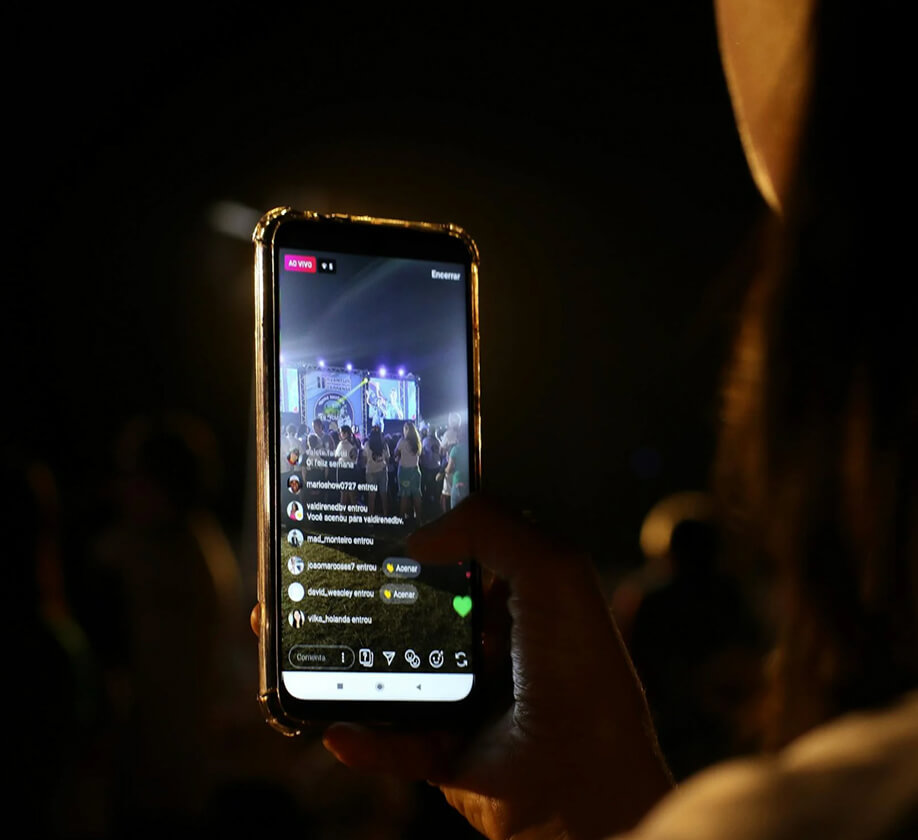
Livestreaming creates a particularly demanding support environment because issues can occur in real time.
Technical problems, account restrictions, payment questions, audience issues, and creator requests may require rapid response. AI-assisted triage can identify urgent cases, while specialized human teams handle issues that cannot be resolved through standard workflows.
For creator-driven platforms, monetization issues can be highly sensitive. Questions may involve eligibility, payment status, account restrictions, or creator program requirements.
Automated workflows can handle common questions, while human specialists can investigate exceptions and escalated disputes.
For large social media and entertainment platforms such as TikTok, Douyin, and Kuaishou, managing customer support entirely in-house can become increasingly difficult as user and creator communities grow.
High volumes of account questions, content-related complaints, livestream issues, monetization inquiries, appeals, and policy questions can place significant pressure on internal support teams. During traffic peaks or rapid market expansion, platforms may also struggle to maintain response times, service quality, and multilingual coverage without continuously increasing their workforce and operational costs.
Outsourcing social media customer support provides a more scalable alternative. Specialized support teams can absorb fluctuating workloads, provide multilingual coverage, and handle large volumes of routine and complex inquiries without requiring platforms to build every capability internally.
More importantly, an effective outsourced model can combine AI-driven efficiency with human expertise. AI can quickly classify inquiries, identify common issues, and automate repetitive interactions, while experienced specialists can handle complex, sensitive, or high-value cases that require contextual judgment and empathy.
For global social media platforms, this approach can improve response speed, operational scalability, service consistency, and user and creator experience, while allowing internal teams to focus on core platform development and growth.
Nexlence combines AI-enabled workflows with specialized human teams to help media and entertainment platforms manage high-volume customer interactions.
Its approach is designed around the operational realities of short-video and social entertainment platforms, including multilingual support, creator operations, user interactions, and complex case handling. The Media & Entertainment solution also emphasizes localized service enablement and always-on support for users and creators.
AI can assist with intent recognition, ticket classification, prioritization, knowledge retrieval, response assistance, and workflow automation. This helps support teams process large volumes of requests without requiring every interaction to be handled manually from beginning to end.
Human specialists remain responsible for the cases where judgment matters most. They can investigate complex problems, handle sensitive complaints, review escalated cases, and provide market-specific support.
This AI-human model allows Nexlence to help platforms improve response efficiency without sacrificing the quality of human interaction.
Related guide: Call Center BPO Services: A Guide to Choosing the Right Customer Support Partner
Platforms may outsource customer support to increase capacity, access specialized teams, support multiple languages and markets, and manage fluctuations in support demand without building every function internally.
AI provides speed and scalability, while human specialists provide contextual judgment, empathy, investigation, and escalation. Combining the two allows platforms to automate routine interactions while maintaining human oversight for complex cases.
Yes. Nexlence provides multilingual user and creator support for media and entertainment platforms, combining AI-enabled workflows with localized human operations to support users across different markets and languages.
For large social and entertainment platforms, customer support is part of the overall user and creator experience—not simply a back-office function.
Nexlence combines AI-powered workflows, specialized human expertise, multilingual operations, and scalable CX delivery to help platforms manage high-volume interactions while maintaining the quality and responsiveness users and creators expect.
Whether the goal is expanding into new markets, supporting a growing creator community, or improving the efficiency of existing customer operations, Nexlence provides an AI-human model built for the complexity of modern media and entertainment platforms.














 PREVOUS ARTICLE