Quick Answer

The right outsourcing customer care service provider is not the one with the lowest rate card or the largest global footprint. It is the one whose delivery geography matches your language and compliance needs, whose operational experience mirrors the complexity of your actual queue, and whose commercial model rewards the outcomes you care about. Start by defining the geography, then evaluate operational proof—not promises, then run a structured pilot before signing anything.
If your business is exploring customer service outsourcing services for the first time, the instinct is often to shortlist providers first and figure out requirements later. That sequence is backwards. Geography shapes talent availability, language proficiency, wage inflation, time-zone alignment, and business continuity more than any other single factor, and the provider list narrows dramatically once the right labor market is identified.
Step 1: Define the Geography Before the Provider
Most buyer regret in outsourcing traces back to a location mismatch that was visible from the start. A provider with a flagship contact center in Manila may be a poor fit if your customers are concentrated in Germany and expect native-level German with cultural nuance. A nearshore operation in Mexico may be ideal for US retail support but unnecessary for a B2B SaaS company whose customers are concentrated in Singapore.
Geography determines three things that no amount of provider excellence can compensate for: language quality at the customer-interaction level, regulatory exposure to data privacy and consumer protection regimes, and the practical overlap of working hours with your internal escalation teams. Providers operating in the same region will have vastly different wage structures, attrition patterns, and infrastructure resilience. The practical move is to shortlist two or three geographies based on customer distribution and compliance requirements, then evaluate providers operating within those geographies. This reverses the default sequence, but it produces a far shorter and more relevant provider list.
Step 2: Evaluate Operational Proof, Not Industry Logos
A provider’s client logo wall tells you which industries they have sold into. It does not tell you whether they have managed a queue that behaves like yours. Supporting inbound order-status inquiries is operationally different from technical troubleshooting, just as both differ from retention-focused billing conversations. The right question is not “do you have experience in our industry?” but “have you managed a program with comparable volume volatility, average handle time, and escalation complexity?”
The evaluation table below maps the criteria that correlate with delivery reliability against what to actually look for in a provider response.
|
Evaluation Criterion
|
What to Ask For
|
Red Flag in the Response
|
|
Peak elasticity
|
Ramp data from a comparable seasonal spike: time to proficiency, quality scores during ramp
|
“We scale easily” without ramp metrics
|
|
Retention economics
|
Annualized agent attrition rate, tenure distribution, cost of replacement
|
Attrition disclosed only as a percentage without tenure context
|
|
Channel depth
|
Live demonstration of voice, chat, email, and social handling with consistent context
|
Channel capability described in slides only
|
|
AI posture
|
Specific automation scope, human fallback design, data governance for AI-handled interactions
|
AI mentioned as a differentiator without deployment evidence
|
|
Security gate
|
Current SOC 2 Type II, PCI DSS, or ISO 27001 certification with scope documentation
|
Certifications “in progress” or held by a parent entity not delivering the service
|
Peak-season elasticity is the first stress test because demand volatility does not create operational weaknesses; it exposes the ones already present. A provider that cannot show you ramp metrics from a comparable program is asking you to fund their learning curve. Retention economics matter for the same reason: agent attrition is the single largest hidden cost in outsourcing, and providers that cannot articulate their tenure distribution are likely managing turnover reactively rather than systematically.
Step 3: Match the Commercial Model to the Outcome
The traditional seat-based pricing model—cost per agent per month—rewards the provider for maintaining headcount, not for resolving customer issues. Outcome-based models, where pricing is linked to first-contact resolution, customer satisfaction, or resolution volume, are gaining traction because they align provider incentives with buyer objectives. Deloitte’s 2024 Global Outsourcing Survey found that 67% of organizations now use outcome-based commercial models, a figure that has risen sharply as buyers demand accountability for results rather than activity.
This does not mean every program should be priced per resolution. Complex, low-volume technical support may still work best on a dedicated-FTE model. But for high-volume, repeatable interaction types—order status, password resets, billing inquiries—the commercial model should at minimum include a performance component tied to resolution quality. The provider’s willingness to discuss outcome-linked pricing is itself a signal of confidence in their operational capability.
Step 4: Run a Pilot That Tests the Hardest Interactions

Reference calls are useful for confirming that a provider can maintain a relationship. They are poor at predicting whether a provider can handle your most difficult interaction types. The only reliable test is a structured pilot that includes interactions the provider has not seen before, with quality scored against your internal benchmarks.
A useful pilot design runs for four to six weeks with a controlled volume that includes at least 20% complex or escalated interactions. Score first-contact resolution and customer satisfaction against your in-house baseline during the same period. If the provider’s performance on routine interactions is strong but complex interactions show a significant gap, that is an operational maturity signal worth investigating before contract signature.
Related guide: What Do Customer Experience Solutions Companies Actually Do?
FAQ
How long does it typically take to transition customer support to an outsourcing provider?
A well-scoped transition for a mid-volume program typically runs 8 to 12 weeks from contract signature to full production. This includes knowledge transfer, system access provisioning, agent training, and a supervised ramp period. Programs requiring specialized compliance training or multilingual coverage may extend to 16 weeks. Providers that promise full production in four weeks for a complex program are either oversimplifying the transition or planning to under-train agents.
What is the single biggest mistake businesses make when selecting an outsourcing customer care provider?
Choosing on price alone. The cheapest provider often delivers the highest total cost once attrition, re-training, quality remediation, and customer churn are factored in. A provider charging 15% more per agent but retaining agents for twice as long will usually deliver a lower effective cost per resolved interaction.
Should we start with a single provider or multiple providers?
For most businesses, starting with a single provider for a defined scope is more manageable than splitting volume across multiple vendors. Multiple providers add governance overhead, create inconsistent customer experiences, and make it harder to attribute performance changes. A single-provider pilot with clear exit criteria is a more controlled starting point.
How do we evaluate a provider’s AI capability without getting lost in the technology?
Ask for a specific scope of automation with a measurable resolution rate, not a platform demonstration. The relevant questions are: what percentage of current interaction volume can this automation handle reliably, how are failures escalated to human agents, and what happens to the customer experience when the AI cannot resolve? A provider that cannot answer these three questions in operational terms is demonstrating a platform, not a capability.
Summary
Choosing an outsourcing customer care service provider should come down to operational fit rather than price, brand recognition, or the size of a provider's agent network. Geography, language coverage, escalation capability, workforce stability, AI deployment, security, and measurable delivery performance all need to be evaluated before a long-term contract is signed.
A structured pilot can reveal far more than a sales presentation. By testing complex interactions, measuring resolution quality, reviewing escalation processes, and examining how the provider manages knowledge and workforce changes, businesses can identify operational risks before they affect customers.
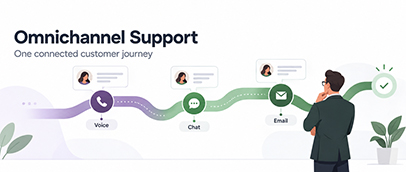
For companies evaluating customer service outsourcing services, Nexlence combines AI-driven capabilities with human customer service operations across multiple customer touchpoints. Its approach connects website, app, social, messaging, and customer-service interactions with real-time data insights, allowing customer interactions to be handled with greater context rather than as isolated tickets.
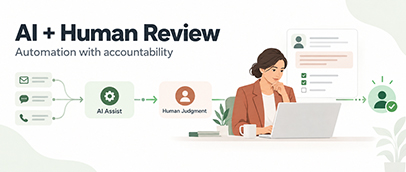
Nexlence also supports an AI-and-human operating model in which automation can handle appropriate parts of the customer interaction while human teams remain involved when judgment, context, or escalation is required. This gives businesses a practical way to introduce AI into customer service operations without making technology the objective itself.
Sources
-
Deloitte, 2024 Global Outsourcing Survey. The survey reports that 67% of organizations use outcome-based commercial models for outsourcing engagements, and that cost reduction as the primary driver for outsourcing fell from 70% in 2020 to 34% in 2024.
-
The Business Research Company, Outsourced Customer Care Services Market Report 2026. The global outsourced customer care services market grew from $76.83 billion in 2025 to $80.37 billion in 2026 at a CAGR of 4.6%, with major trends including AI-driven support tools and omnichannel service models.
-
Forrester, 2026 CX Index. Forrester found that the average S&P 500 company attributes 14% of revenue variance to customer experience quality, up from 9% in 2023, reinforcing the strategic importance of support delivery quality in outsourcing decisions.
-
ISG, 2024 Market Lens BPO Study, survey of 368 decision-makers. Respondents reported saving 16% on labor costs through outsourcing key business processing tasks.
















 Nexlence



 PREVOUS ARTICLE
