We use cookies to improve our site. By using or further navigating our site you accept our cookie policy.Please click here to check the Privacy Policy and Cookie Policy.



Smart
Empowerment

2026-08-05
 Nexlence
A customer buys a jacket online. It arrives in the wrong size. She goes to the website, finds a returns form buried three clicks deep, fills it out, and waits. Four days later, no response. She emails. Gets an auto-reply. Emails again. By day seven, she has disputed the charge with her bank, left a two-star review mentioning the returns process specifically, and told two friends not to bother with the brand.
The jacket cost $80. The lost lifetime value, the chargeback fee, the review impact, and the word-of-mouth damage cost multiples of that. And the entire sequence started not with the wrong size — but with a returns and refunds customer support process that wasn't built to handle the moment.
This is the operational reality that brands repeatedly underestimate. Returns are not an exception to the customer experience. For a growing percentage of buyers, they are the experience — the test that reveals whether a brand actually stands behind what it sells.
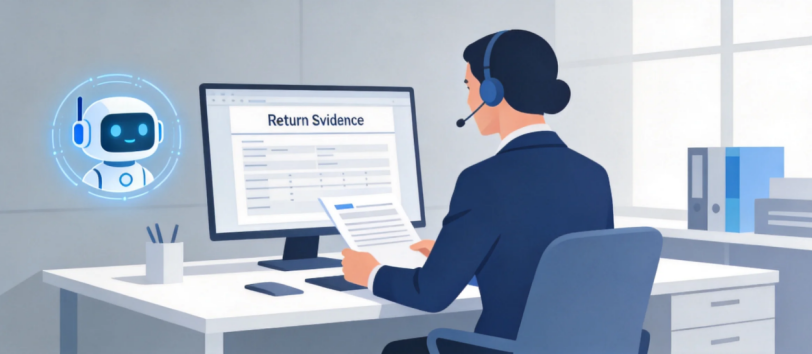
The moment a customer submits a return request, the clock starts on their patience. The first response — whether automated or human — sets the tone for the entire interaction.
What good intake looks like:
Acknowledgment within minutes, not hours, confirming the request has been received
Clear communication of the next steps, timeline, and what the customer needs to do
Multilingual support for international buyers — a return request submitted in Portuguese should not receive a response in English
Pre-authorization of returns for clear-cut cases, eliminating the back-and-forth that frustrates customers on straightforward claims
What breaks at this stage:
Delayed acknowledgment that leaves customers uncertain whether their request was received
Generic auto-replies that do not address the specifics of the return reason
Policy language that is technically accurate but emotionally dismissive — "your request has been logged" is not the same as "we're on it"
Not all returns are straightforward. A customer claiming a product arrived damaged needs a different response than one returning because they changed their mind. A cross-border buyer navigating different consumer protection rules needs a different level of compliance knowledge than a domestic customer.
The interactions that require specialist handling:
Damaged or defective product claims, where evidence assessment and policy application need to be consistent and defensible
Fraudulent return attempts, which require firm but diplomatically handled responses
Cross-border disputes, where consumer protection regulations vary by market and incorrect handling creates compliance risk
High-value orders, where the financial stakes justify additional verification steps and senior agent involvement
Escalated cases, where a customer who has already had one unsatisfactory interaction needs de-escalation before resolution
This is the stage where the difference between a generalist support team and a specialized e-commerce returns support team becomes most visible. Agents handling dispute resolution need product knowledge, policy depth, cultural fluency, and the judgment to distinguish between the letter and the spirit of a return policy.
Issuing a refund is not the end of the interaction. It is the transition point — the moment where a customer who has been through a frustrating process either feels genuinely resolved or simply processed.
What closes the loop properly:
Proactive notification when the refund has been issued, with a clear timeline for when it will appear
A follow-up message after the refund lands confirming resolution and inviting feedback
Where appropriate, a goodwill gesture — a discount on a future purchase, an upgrade on a replacement — that converts a negative experience into a reason to return
Feedback collection that feeds directly into product and operations teams
The brands that treat step three as administrative are leaving loyalty on the table. The brands that treat it as a relationship moment — one more chance to show the customer that the brand takes the experience seriously — convert a significant percentage of returners into repeat buyers.
Building an in-house returns and refunds customer support team gives brands direct control and close product alignment. It also requires significant fixed investment that scales poorly with volume fluctuation — and most e-commerce brands experience dramatic volume variation, particularly around peak seasons.

The comparison below reflects operational reality rather than best-case assumptions:
| Factor | In-House Team | Outsourced Specialist Partner |
|---|---|---|
| Setup time | 2–4 months minimum | Weeks with established infrastructure |
| Cost structure | Fixed — headcount, training, management | Variable — scales with actual volume |
| Language coverage | Typically 1–2 languages | Multilingual, locally fluent |
| Peak season scalability | Slow — constrained by hiring | Elastic — adjusts to demand |
| Dispute resolution expertise | Generalist training | Specialist workflows by case type |
| Cross-border compliance | Requires market-by-market legal expertise | Embedded compliance architecture |
| 24/7 coverage | Very high cost | Built into delivery model |
| QA coverage | Manual sampling | Up to 100% automated |
For brands selling internationally, cross-border e-commerce returns management introduces a layer of complexity that in-house teams rarely handle well without significant investment. Consumer protection regulations differ materially between markets. A return policy that is legally compliant in the US may create liability in Germany. A refund timeline that satisfies buyers in the UK may violate consumer rights requirements in Brazil.
Multilingual e-commerce dispute resolution requires not just language fluency but compliance knowledge embedded into the handling of each case — knowing when local regulations entitle a customer to a refund regardless of brand policy, and handling that interaction in a way that protects the brand's legal position while maintaining the customer relationship.
Nexlence's global compliance knowledge base and risk monitoring track policies, privacy rules, and transaction risks to keep operations compliant and protect continuity and reputation across markets.
AI does not replace human judgment in returns handling — it removes the work that does not require human judgment, freeing agents for the interactions that do.
What AI handles effectively in returns workflows:
Automated return request classification — categorizing incoming requests by reason code, product type, and complexity before human review
Policy application for clear-cut cases — approving straightforward returns against defined criteria without agent involvement
Status update automation — proactively notifying customers at each stage of the returns process without manual triggering
Translation and language routing — ensuring multilingual requests reach agents with the right language capability immediately
Sentiment monitoring — flagging interactions where customer frustration is escalating before the interaction becomes a chargeback or a review
The operational impact:
| Process | Without AI Automation | With AI Automation |
|---|---|---|
| Return request acknowledgment | 2–24 hours | Under 5 minutes |
| Straightforward case resolution | 1–3 days | Same day or automated |
| Agent time per interaction | High — admin-heavy | Reduced — focused on complex cases |
| QA coverage | 2–5% sampling | Up to 100% of interactions |
| Escalation identification | Reactive — after complaint | Proactive — during interaction |
AI-automated returns and refunds customer support handles volume efficiently. It does not handle nuance well. The interactions that require human involvement are precisely the ones where the stakes are highest:
Customers who are genuinely distressed — frustrated, angry, or feeling deceived — need a human response that de-escalates, acknowledges, and repairs
Complex dispute cases where evidence needs to be assessed and judgment applied
High-value orders where the financial stakes justify senior agent involvement and careful documentation
Fraud assessments, where the pattern recognition AI can flag cases but human judgment is required to make the final call
Cultural edge cases, where what is technically correct is culturally inappropriate and a human with local knowledge can navigate the difference
The right model is not AI replacing agents in returns handling. It is AI handling the straightforward volume so that agents can focus entirely on the cases where their judgment, empathy, and expertise make a material difference to the outcome.
Nexlence built a multilingual global CX network covering English, Portuguese, Spanish, and Russian to handle inquiries, disputes, and complaints across markets — with overseas operations accounting for more than 60% of volume, and large teams ensuring consistent, high-quality support worldwide.
For a cross-border e-commerce brand, this means returns and refund interactions in every major market are handled by agents who speak the language natively, understand the local consumer protection environment, and know how to resolve disputes in a way that is both legally defensible and culturally appropriate.
Nexlence operates with 1,600+ CX agents and 400+ specialists handling dispute tickets for global cross-border e-commerce platforms. The specialist distinction matters specifically for returns and refund operations — dispute ticket handling is a different skill set from general customer support, and brands that route returns interactions through generalist teams consistently see lower resolution rates and higher escalation volumes.
Nexlence provides 24/7 multilingual coverage with AI-assisted automation for high-volume cases and specialist resolution for complex ones — maintaining quality, reducing response times, and building trust across global markets.
Returns volume for most e-commerce brands is not linear. Post-holiday periods, sale events, and product launches generate return spikes that can triple or quadruple normal volume within days. An in-house team sized for average volume breaks under peak load. An outsourced operation with elastic scaling absorbs the spike without degrading the customer experience.
For a Southeast Asia cross-border e-commerce platform, Nexlence completed go-live ahead of schedule, scaled global resources flexibly, and maintained zero time-zone gaps for business operations — demonstrating the speed and flexibility that peak season returns management requires.
Every returns interaction in a cross-border context carries compliance exposure. Nexlence's integrated compliance and risk management capabilities track policies, privacy rules, and transaction risks to keep e-commerce operations compliant and protect continuity and reputation across markets.
For brands processing cross-border e-commerce returns management across multiple jurisdictions, this means returns decisions are made with compliance intelligence embedded in the workflow — not applied retroactively after a regulatory issue has already emerged.

It starts with speed — acknowledgment within minutes, not hours. It continues with clarity — the customer knows exactly what happens next, on what timeline, and what they need to do. It uses specialist agents for dispute resolution rather than routing complex cases through generalist queues. And it closes with follow-up — confirming the refund, inviting feedback, and where appropriate, offering a reason to return. The brands with the highest post-return repurchase rates treat every return as a service recovery opportunity, not an administrative task.
Cross-border e-commerce returns management requires compliance knowledge embedded at the agent level — understanding what consumer protection regulations apply in each market, how return timelines are governed locally, and when brand policy must yield to statutory rights. Language fluency is necessary but not sufficient. Agents handling international returns need market-specific compliance training and clear escalation paths for cases where local regulations create obligations that standard policy does not address.
AI handles volume efficiently — straightforward return approvals, status updates, language routing, and sentiment monitoring. Human agents handle complexity — distressed customers, disputed claims, fraud assessments, and high-value cases where judgment matters. The right balance depends on the mix of your return reasons: brands with high volumes of clear-cut returns benefit most from automation; brands with complex, high-value, or cross-border return patterns need specialist human capacity more than automation efficiency.
Done well, outsourcing to a specialized e-commerce returns support team with established infrastructure, pre-trained agents, and AI-assisted workflows consistently improves both. The operational advantage comes from dedicated expertise — agents who handle returns all day develop pattern recognition and policy fluency that generalist agents working across multiple inquiry types do not build at the same pace. Combined with 24/7 coverage that in-house teams rarely sustain cost-effectively, outsourced specialist operations typically reduce both response time and resolution cycle by measurable margins.
Ask specifically: how many agents do you have dedicated to dispute resolution versus general inquiries? What compliance frameworks do you use for cross-border returns? What percentage of return interactions are handled by AI versus human agents, and how do you determine the routing? What does your QA coverage look like for returns-specific interactions? A partner with genuine multilingual e-commerce dispute resolution expertise will answer these questions with specifics. A generalist provider will answer in abstractions.
Returns are not a problem to be minimized — they are a test to be passed. Every brand that sells online will face them. The ones that build returns and refunds customer support infrastructure capable of handling that test with speed, compliance, and genuine customer care will convert a meaningful share of returners into loyal repeat buyers. The ones that treat returns as a cost center to be suppressed will keep absorbing the compounding costs — chargebacks, negative reviews, lost lifetime value — that poor returns experiences generate at scale. Nexlence's AI-powered, multilingual, specialist-staffed e-commerce CX model is built for exactly this challenge — with 1,600+ CX agents, 400+ dispute specialists, and compliance architecture embedded across every market. If returns are becoming a pressure point on your brand's growth and reputation, the conversation worth having is at nexlence.com.














 PREVOUS ARTICLE