We use cookies to improve our site. By using or further navigating our site you accept our cookie policy.Please click here to check the Privacy Policy and Cookie Policy.



Smart
Empowerment

2026-08-05
 Nexlence
You‘ve spent months building your product, refining your pricing, and optimizing your marketing funnel. Then a customer reaches out after a purchase — and the experience they get determines whether they buy again, tell their network, or leave a review that quietly damages every conversion that follows. That moment, multiplied across thousands of interactions a day, is why choosing among the best customer service outsourcing companies is one of the most consequential operational decisions a brand can make.
This guide breaks down exactly what to look for, what to avoid, and how to evaluate outsourcing partners with enough rigor to make a decision that holds up as your business scales.
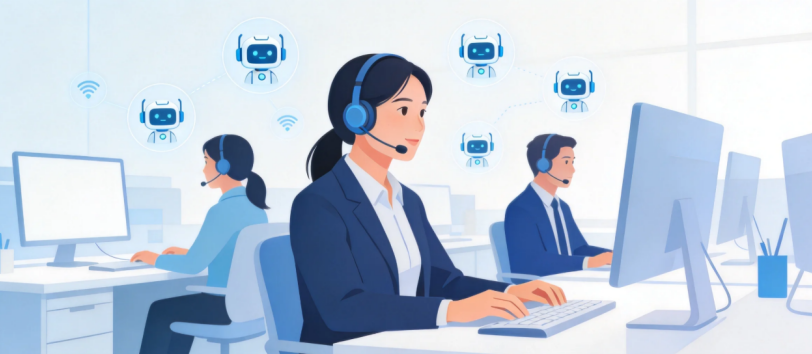
Most brands think about customer service outsourcing in terms of cost savings. That framing misses the bigger number.
A customer who receives a poor support experience doesn‘t just churn — they share the experience. On social platforms, review sites, and local community channels, one unresolved complaint reaches far more people than the original transaction did. For brands expanding globally, the reputational math is particularly unforgiving: a fragmented or culturally tone-deaf support experience in a new market can set back brand trust by months.
The businesses that treat outsourcing purely as a cost lever tend to cycle through vendors, rebuild service operations repeatedly, and absorb the hidden costs of inconsistency — repeat contacts, escalations, refunds, and lost lifetime value — that never appear on the original outsourcing budget.
The standard has shifted. A vendor that provides agents and handles volume is no longer sufficient. What separates genuine leaders from commodity providers in 2026 comes down to three capabilities that most traditional call centers simply weren‘t built to deliver:
AI infrastructure that actually works in production — not a chatbot layer added to a legacy operation, but a purpose-built intelligent platform that governs quality, staffing, knowledge management, and compliance across every interaction
Global delivery with local authenticity — network reach and language coverage backed by culturally fluent teams, not translation tools
Data that flows back to the business — interaction intelligence that feeds product, marketing, and operations rather than staying trapped in vendor-side reporting
Every outsourcing vendor claims AI capability in 2026. The question worth asking is specific: where, exactly, does AI operate in your delivery model?
What genuine AI integration looks like:
Automated quality assurance covering 100% of interactions — not a 2–5% sample
Real-time agent assistance surfacing relevant knowledge during live interactions
Predictive scheduling that anticipates volume spikes before they affect wait times
AI-driven sentiment analysis that identifies churn risk before a customer leaves
What to be skeptical of:
Chatbots positioned as AI-powered CX
QA described as "AI-enhanced" without specifics on coverage percentage
Automation metrics reported only in quarterly reviews rather than in real time
For any brand operating across more than one language market, this is foundational — not optional. The distinction worth making is between multilingual coverage (language support exists) and multilingual fluency (local teams with genuine cultural knowledge operate in each market).
A customer in São Paulo and a customer in Jakarta both speak their own languages. But they also navigate different consumer protection norms, different platform expectations, and different emotional registers for what "good service" feels like. Agents working from a script translated into the local language deliver coverage. Locally embedded teams with market-specific knowledge deliver fluency.
Key questions to ask any outsourcing partner:
Where are your delivery teams physically located for each market?
Are agents native speakers or trained language specialists?
How do you handle compliance requirements that differ by market?
Top customer service outsourcing for e-commerce brands looks meaningfully different from outsourcing designed for consumer electronics, pharmaceutical, or media and entertainment clients. The best outsourcing companies build domain expertise that allows agents to handle complex, product-specific interactions — not just route tickets.
| Industry | Core Support Requirements |
|---|---|
| E-commerce | Dispute resolution, returns, multilingual cross-border operations |
| Consumer Electronics | Technical troubleshooting, firmware queries, pre-sales consultation |
| Pharmaceutical | Regulatory compliance, patient guidance, physician support |
| Media & Entertainment | Content moderation, user trust and safety, platform compliance |
| Consumer Goods | After-sales support, product education, loyalty programs |
A vendor without demonstrated experience in your specific industry will learn on your customers‘ time — at your expense.
Traditional QA reviews 2–5% of interactions. That means on a given day, 95–98% of your customer experiences are never reviewed. Problems become systemic before they are identified.
The difference in practice:
| QA Model | Coverage | Detection Speed | Brand Risk |
|---|---|---|---|
| Manual sampling | 2–5% of interactions | Weeks to months | High — issues compound before detection |
| AI-assisted sampling | 10–20% of interactions | Days to weeks | Moderate — faster but still incomplete |
| 100% automated AI QA | Every interaction | Real-time | Low — issues caught before they scale |
For brands where a single viral complaint can move the needle on consumer sentiment, the difference between sampled QA and full-coverage QA is not a process detail. It is a brand protection decision.
The best outsourcing arrangements generate data that makes the entire business smarter. Pre-purchase inquiry patterns reveal content gaps in marketing. Complaint escalation trends signal product issues before they reach a critical threshold. Sentiment shifts by market predict churn before it shows up in retention numbers.
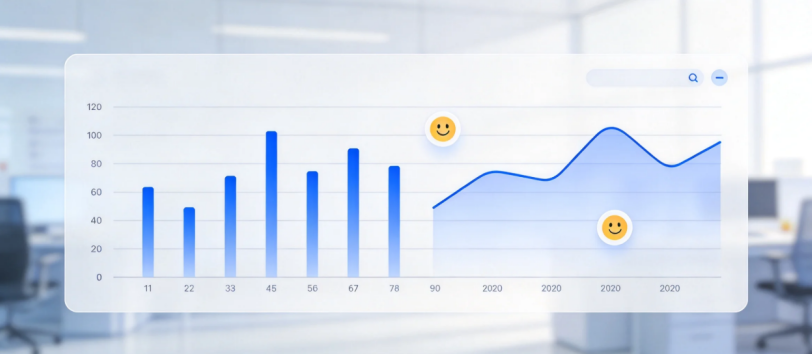
Questions to ask about data:
What interaction data do I have direct access to, and in what format?
How is performance reported — in static monthly decks or in real-time dashboards?
Can your platform connect to our internal CRM and analytics tools?
Any vendor that cannot answer these questions clearly is one where your data stays in their system, not yours.
Many brands default to building in-house customer service teams because it feels like more control. The reality of that control — and its cost — is worth examining directly.
In-house teams offer direct brand alignment and close integration with product and operations. But they also require significant fixed investment in recruitment, training, infrastructure, and management overhead. Scaling them quickly is difficult. Covering multiple languages and time zones is expensive. And quality assurance at scale requires technology investment that most in-house operations never make.
The comparison below reflects typical operational realities rather than best-case scenarios:
| Factor | In-House Team | Professional Outsourcing Partner |
|---|---|---|
| Setup time | 3–6 months minimum | Weeks with established infrastructure |
| Fixed cost structure | High — headcount, HR, training, tech | Variable — scales with actual volume |
| Language coverage | 1–2 languages typically | 10+ languages with local fluency |
| QA coverage | Manual, limited | Up to 100% automated |
| 24/7 coverage | Very high cost | Built into delivery model |
| AI infrastructure | Requires separate investment | Integrated in leading providers |
| Scalability | Slow — constrained by hiring | Elastic — adjusts to demand |
| Market-specific compliance | Requires legal expertise per market | Embedded in delivery process |
Outsourcing is not the right answer for every business at every stage. But there are clear signals that indicate a professional partner will outperform an in-house model:
Entering a language market where in-house expertise does not exist
Experiencing volume growth that outpaces hiring capacity
Recognizing that QA and technology investment is pulling resources from core business priorities
Expanding into markets with regulatory requirements that require specialized compliance knowledge
For growing brands, the primary value of working with affordable outsourced customer support for small businesses is time-to-operational: getting professional-grade support running without the months of hiring, training, and infrastructure investment required to build in-house. The criteria to prioritize:
Fast onboarding with pre-built industry knowledge
Transparent pricing that scales with actual volume
Clear escalation paths and reporting visibility from day one
Flexibility to adjust scope as the business evolves
For brands operating across multiple language markets, outsourced multilingual customer support solutions are not an add-on — they are the foundation. A partner that covers the languages on a map but cannot deliver culturally fluent service in each market will underperform local competitors who built genuine local engagement from the start.
The criteria to prioritize:
Physical delivery presence in each target market, not remote-only coverage
Native-speaking agents with market-specific cultural training
Compliance architecture built into each market‘s delivery process
Unified reporting across all markets with market-level visibility
For large-scale operations, the focus shifts to enterprise customer service outsourcing solutions that integrate with existing CRM and data infrastructure, meet the compliance requirements of each operating market, and provide the kind of real-time business intelligence that makes outsourced CX a strategic asset rather than a cost center.
The criteria to prioritize:
Native integration with enterprise CRM and analytics platforms
Documented compliance frameworks for each operating market
Data ownership and security architecture with full audit trails
Dedicated account management with direct access to performance data
At the center of Nexlence‘s delivery model is X-Force — a proprietary AI platform purpose-built for enterprise-grade customer experience operations. X-Force is not a chatbot layer. It is the operational intelligence system that governs every interaction across Nexlence‘s global delivery network.
What X-Force delivers in practice:
AI agent clusters that handle real-time customer support with consistent brand voice across all channels
100% automated quality assurance and compliance checks — every interaction, every market, every day
Predictive resource scheduling that adjusts staffing before volume spikes affect wait times
Multimodal AI knowledge management that keeps agents equipped with accurate, up-to-date product intelligence
Nexlence operates more than 20 delivery centers across 110+ countries — including the Philippines, Romania, Peru, Indonesia, Vietnam, Malaysia, Egypt, Japan, and South Korea. Each center is staffed by locally embedded teams, not remote agents covering markets from a centralized hub.
This distinction matters for 24/7 customer service outsourcing with multilingual support: a customer in Cairo and a customer in Tokyo both receive service from agents who understand not just the language, but the consumer norms, platform expectations, and cultural context that make the interaction feel genuinely local.
The measure of any outsourcing partner is not the platform architecture — it is what the architecture produces for real clients under real operating conditions.
Global Short-Video Platform — Media & Entertainment
Built a multilingual moderation, customer service, and operations system across Southeast Asia, Latin America, the Middle East, and beyond. Results: content review accuracy of 99.5%, coverage across 15+ countries, user complaint rate reduced by 40%.
Global Portable Power Brand — Smart Manufacturing
Localized, AI-enabled global contact center for end-to-end pre-sales and after-sales support worldwide. Results: operational efficiency at a historic high, customer satisfaction exceeding 88%.
Leading Cross-Border E-Commerce Platform
Multilingual CX operation covering English, Portuguese, Spanish, Russian, and additional languages for cross-border buyer support. Results: No. 1 supplier satisfaction ranking, coverage across 15+ cities worldwide, 10+ years of continuous service delivery.
Intelligent Cleaning Robot Brand — Europe
Multilingual customer service across European markets with AI-powered quality governance. Results: CSAT above 90%, First Contact Resolution improvement of 25%.
Top Pharmaceutical Company
Omnichannel, AI-powered customer service across respiratory, cardiovascular, metabolic, and oncology categories — supporting patients, physicians, and sales representatives. Results: CSAT above 95%, more than 1 million service interactions delivered.
These are not aspirational benchmarks. They are verified outcomes from live global deployments across industries where the cost of poor customer experience is measurable and significant.
The most important factors are AI infrastructure depth (specifically QA coverage and automation capability), language and cultural fluency in your target markets, demonstrated experience in your specific industry, data transparency and real-time reporting access, and evidence of measurable outcomes for clients in similar operational contexts. Cost is a factor, but the brands that optimize primarily for cost tend to underinvest in the quality architecture that makes outsourcing actually work.
Genuine outsourced multilingual customer support solutions involve locally embedded teams with cultural fluency in each market, compliance architecture tailored to local regulations, and platform expertise relevant to how consumers in each market prefer to communicate. Hiring bilingual agents centrally covers language — it does not cover the cultural, regulatory, and platform nuances that determine whether international customers feel genuinely served or just technically addressed.
Ask specifically: what percentage of interactions are covered by automated QA? How does the AI assist agents in real time during live interactions? What predictive capabilities does the platform have for staffing and demand forecasting? A genuine AI-powered operation will answer these questions with specific numbers and documented capabilities. A vendor using "AI" as a marketing term will respond with generalities.
Affordable outsourced customer support for small businesses is often the fastest path to professional-grade CX without the fixed overhead of building in-house. The key is choosing a partner with flexible pricing that scales with actual volume, fast onboarding capability, and clear reporting from day one. Small businesses that try to match enterprise in-house CX spending typically find the overhead unsustainable; outsourcing to the right partner converts that fixed cost into a variable one that grows with revenue.
Enterprise customer service outsourcing solutions require integration with existing CRM and analytics infrastructure, compliance frameworks tailored to each operating market, data security architecture with full audit trails, and the kind of real-time business intelligence that makes CX a strategic input to product and marketing decisions — not just a support function. The best enterprise outsourcing partners are not vendors who handle volume; they are operational partners who make the entire business more intelligent through the data generated by every customer interaction.
Choosing the right partner from the best customer service outsourcing companies is ultimately a decision about what kind of brand experience your customers receive at the moments that matter most. Nexlence combines proprietary AI infrastructure through X-Force, 20+ global delivery centers spanning 110+ countries, and verified outcomes across e-commerce, consumer electronics, pharmaceutical, and media industries — delivering customer experience that is consistent, culturally fluent, and measurable at every scale. If you are ready to move beyond fragmented vendor management and build CX that compounds with your growth, explore what that looks like in practice at nexlence.com.












 PREVOUS ARTICLE