We use cookies to improve our site. By using or further navigating our site you accept our cookie policy.Please click here to check the Privacy Policy and Cookie Policy.



Smart
Empowerment

2026-10-10
 Nexlence

Quick Answer: The most practical applications of AI in customer experience management are no longer limited to chatbots. In 2026, businesses can apply AI to customer intent detection, agent assistance, personalized interactions, quality monitoring, and predictive customer operations. The strongest implementations connect these capabilities with customer data and human decision-making rather than treating AI as a standalone automation layer.
As customer interactions spread across websites, apps, social media, messaging platforms, and customer service channels, businesses need more than additional support capacity. For organizations already evaluating customer service outsourcing services, AI can help analyze customer interactions, support agents, automate selected workflows, and identify problems that would otherwise remain hidden inside large volumes of service data.
The important change is that AI can now participate at different points in the customer experience—not only at the moment a customer asks a question.
AI in customer experience management refers to the use of artificial intelligence to understand customer interactions, support service workflows, automate selected tasks, assist employees, and generate insights from customer data.
That makes it broader than an AI chatbot.
A chatbot may answer a frequently asked question, but AI can also classify a customer's intent, retrieve relevant information, summarize previous conversations, identify sentiment or escalation risk, recommend an action to an agent, review completed interactions, and identify recurring service problems.
This wider perspective matters because customer experience is created through a sequence of interactions rather than one isolated conversation.
Salesforce's seventh State of Service research illustrates the direction of the market: service professionals surveyed globally estimated that AI was handling about 30% of service cases in 2025 and expected AI to handle 50% by 2027. The same research emphasizes the importance of data integration and human-AI collaboration.
One of the most useful applications of AI is understanding what customers are actually trying to accomplish.
A single message may contain several signals.
A customer might write, “My package still hasn't arrived and nobody has answered my previous message.” The literal topic is delivery, but the underlying issue includes an unresolved support case and growing frustration.
AI can analyze the conversation, classify the intent, retrieve relevant customer history, and determine which workflow should handle the interaction.
This can improve routing because the system does not have to rely entirely on fixed keywords.
It also creates a foundation for more personalized service. Instead of treating every “where is my order?” question identically, the system can distinguish between a normal delivery-status request and a repeated unresolved complaint.
| AI Application | What It Analyzes | Potential CX Value |
|---|---|---|
| Intent detection | Customer language and context | Routes requests more accurately |
| Conversation analysis | Previous and current interactions | Provides broader customer context |
| Sentiment analysis | Language and interaction patterns | Helps identify potentially sensitive cases |
| Topic classification | Product, order, complaint, refund, etc. | Connects customers to relevant workflows |
| Case summarization | Previous conversation history | Reduces repetitive information gathering |
The value comes from combining language understanding with operational context.

The second major use case is supporting human agents while they are working.
Instead of asking an agent to search through a large knowledge base during every conversation, AI can retrieve relevant information and present it at the appropriate moment.
For example, if a customer asks about a refund policy, AI can identify the relevant policy, summarize the applicable conditions, and suggest a response. The human agent remains responsible for deciding whether the suggested response is appropriate.
This distinction is important.
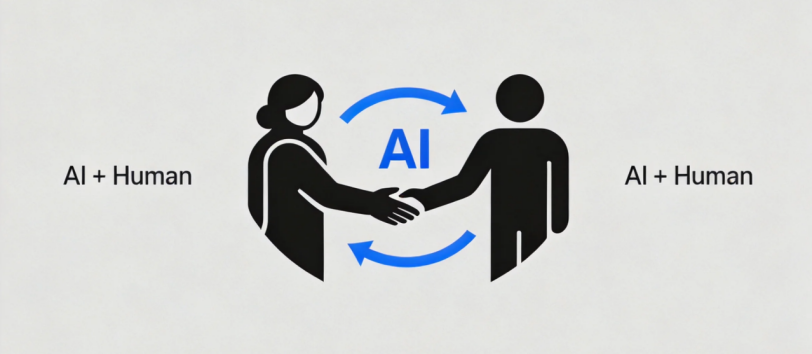
Effective AI in customer experience management does not have to mean removing humans from the workflow. In many cases, the technology reduces information-search time while leaving judgment and customer communication with the human agent.
Salesforce reported that service representatives using AI spend less time on routine cases, while AI-enabled teams are increasingly able to devote attention to more complex customer issues.
For businesses, this can change the role of AI from “automated customer service” to “customer service augmentation.”
Personalization is another important application.
Traditional personalization often depends on basic customer information such as name, purchase history, or location. AI can combine more signals to determine what information is most relevant to a particular interaction.
Imagine two customers contacting a consumer electronics brand about the same product.
One is asking how to configure a newly purchased device. Another has contacted support three times because the device repeatedly disconnects.
The correct response should not be identical.
AI can examine previous interactions and customer context so that the second case receives a different workflow from the first.
This is where personalization becomes operational rather than cosmetic.
The goal is not simply to insert a customer's name into a message. It is to determine what information, workflow, escalation path, or support action is appropriate for that customer at that point in the journey.
Quality assurance is traditionally based on sampling a limited number of customer interactions.
AI can expand that process by analyzing much larger volumes of conversations.
For example, an AI quality system may examine whether an interaction followed required procedures, whether the correct information was provided, whether an escalation should have occurred, or whether a recurring issue is appearing across multiple agents.
This creates another important application of AI in customer experience management: identifying operational patterns rather than only evaluating individual conversations.
Consider a situation where customers repeatedly receive technically correct answers but still contact support again within a short period.
A basic QA process might mark those conversations as compliant.
An AI-based analysis of repeat contacts could reveal that the underlying issue is not response accuracy but inadequate resolution.
That distinction can lead to more useful operational improvements.
Nexlence's digital CX offering describes AI-enabled quality assurance and customer experience intelligence as part of its broader CX operating model.

The most advanced use of AI moves from responding to customer problems toward identifying them earlier.
Predictive models can analyze customer interaction patterns, service histories, product issues, and other operational signals to identify situations that may require attention.
For example, a sudden increase in inquiries about the same product feature may indicate that a recent product change is confusing customers.
A spike in delivery complaints within one geographic region may indicate an operational issue rather than individual customer dissatisfaction.
Instead of waiting for every customer to contact support, the business can investigate the underlying problem and potentially communicate proactively.
This represents an important shift in CX management.
The question becomes not simply “How quickly did we answer?” but “What patterns are telling us that customers may need help before they contact us?”
| Use Case | Primary Function | Human Role | Useful Metrics |
|---|---|---|---|
| Intent analysis | Understand and classify customer needs | Review complex or ambiguous cases | Routing accuracy, escalation rate |
| Agent assistance | Retrieve information and recommend responses | Make decisions and communicate with customers | Handling time, resolution quality |
| Personalization | Adapt interaction to customer context | Handle exceptions and relationship-sensitive cases | CSAT, repeat contacts |
| AI quality assurance | Analyze interaction quality at scale | Investigate issues and coach teams | QA findings, compliance, repeat contacts |
| Predictive CX | Identify emerging customer problems | Decide operational response | Complaint trends, proactive resolution |
A business can deploy sophisticated AI and still receive poor results if its customer data is fragmented.
Customer history may be distributed across CRM systems, help desks, e-commerce platforms, social channels, order systems, and separate databases.
When these systems do not communicate effectively, AI may have an incomplete picture of the customer.
Salesforce's 2025 State of Service research found that organizations with unified service-channel data were 1.4 times more likely to describe their AI implementation as very successful.
This is why AI implementation should start with the data environment rather than the AI interface.
A business should understand what customer information exists, where it is stored, which systems can access it, how current it is, and what controls govern its use.
One of the biggest misconceptions about AI in CX is that every customer interaction should eventually become automated.
That is not necessarily the most effective operating model.
A customer asking for an order status may require very little human involvement. A customer disputing a charge, reporting a serious product problem, or expressing strong dissatisfaction may require contextual judgment and careful communication.
The appropriate model can therefore be task-based.
AI can gather information, classify the issue, retrieve relevant policies, summarize previous interactions, and suggest a response. A human can then make the final decision when the interaction involves ambiguity, risk, exceptions, or emotional sensitivity.
This approach also creates a clearer framework for measuring AI performance because businesses can determine which parts of a workflow AI should own and where human intervention remains necessary.
AI projects should not be judged solely by automation rates.
A chatbot that handles a large number of conversations is not necessarily improving the customer experience if customers repeatedly have to contact the company again.
A broader measurement framework can connect operational and customer outcomes.
For example:
Efficiency: response time, handling time, agent productivity.
Resolution: first-contact resolution, repeat contacts, escalation rates.
Customer experience: CSAT, customer effort, complaint rates.
Quality: policy compliance, response accuracy, QA results.
Business impact: retention-related indicators, service cost, and operational scalability.
The right metrics depend on the workflow. An AI system used for agent assistance should not necessarily be measured in the same way as an AI system handling self-service inquiries.
Nexlence positions AI as part of a broader customer experience operating model that combines AI capabilities with human expertise and global customer operations. Its digital CX services include AI-powered customer support, omnichannel engagement, quality assurance, predictive resource management, and multilingual customer contact services.
This model reflects the broader direction of AI-enabled CX: technology is most useful when it is connected to customer data, operational workflows, human expertise, and measurable service outcomes.
For businesses evaluating customer service outsourcing services, this combination can be particularly relevant when AI capabilities need to operate alongside multilingual customer support and human-led customer interactions.
Related guide: AI Driven Customer Experiences: How AI Is Transforming the Future of Customer Experience
AI in customer experience management refers to using artificial intelligence to understand customer interactions, automate selected workflows, assist service employees, analyze customer feedback, and identify patterns that can improve customer operations.
Customer self-service and agent assistance are among the most visible applications. However, AI is increasingly being used for conversation analysis, quality assurance, personalization, and predictive customer operations.
AI can automate or assist with certain customer service tasks, but many interactions still require human judgment. A task-level approach allows AI to handle information gathering and repetitive processes while humans manage complex, sensitive, or exception-based situations.
AI can analyze customer history, current interaction context, intent, and other available signals to determine which information or workflow is most relevant. This makes personalization more about the customer's actual situation than simply inserting personal details into a message.
AI systems depend on the quality, accessibility, and consistency of the data they use. Fragmented or outdated customer information can limit the usefulness of AI and create inconsistent experiences across channels.
Businesses should combine efficiency metrics such as response and handling time with customer and quality metrics such as CSAT, repeat contacts, resolution rates, escalation rates, and interaction quality. The appropriate metrics depend on the specific AI workflow.
The most useful applications of AI in customer experience management are moving beyond simple chatbot automation.
AI can help businesses understand customer intent, assist agents, personalize interactions, monitor quality at scale, and identify emerging problems before they become larger customer-service issues.
The important consideration for 2026 is therefore not simply whether a company uses AI. It is how AI is connected to customer data, operational workflows, human expertise, and measurable customer outcomes.
When these elements work together, AI becomes part of the operating model rather than another isolated customer-service tool.
Salesforce, Seventh Edition State of Service Report, based on research involving 6,500 service professionals worldwide. Salesforce — State of Service Research
Salesforce, Inside the Seventh Edition of the State of Service Report, including findings on unified service data and AI implementation. Salesforce — Seventh Edition Insights
Qualtrics XM Institute, The State of Customer Experience Management, 2025, covering CX maturity, obstacles, and AI-powered tools used by CX practitioners. Qualtrics XM Institute — State of CX Management 2025

















 PREVOUS ARTICLE