Quick Answer
CX outsourcing means handing some or all of your customer-facing operations, such as support, order care, onboarding, and moderation, to an external partner. The best CX outsourcers combine trained multilingual teams, AI tooling, tight quality governance, and pricing that matches how your volume behaves. Choose on fit with your industry, markets, and metrics rather than on the lowest hourly rate.
Most brands do not decide to work with CX outsourcers on a whim. It usually starts with a small, uncomfortable signal: response times slipping during a campaign, a support lead spending Friday nights clearing tickets, a new market opening with nobody who speaks the language. This guide explains what CX outsourcing really covers, how the engagement models differ, and how to judge CX outsourcers so you end up with a partner rather than just a vendor.
What CX outsourcing actually covers
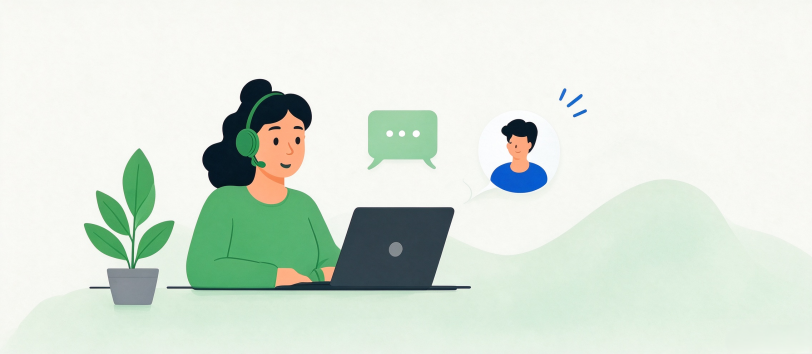
The phrase is broader than "call center." Customer experience outsourcing covers any customer-facing process that a specialist provider runs on your behalf. That includes answering pre-sale and post-sale questions across chat, email, phone and social channels, handling order changes, refunds and disputes, onboarding new users, moderating community content, and collecting the feedback that tells you where the experience is breaking down.
What separates modern CX outsourcing from the older call-center model is scope and intent. A traditional contract measured seats and call minutes. Today's arrangements are usually measured on outcomes such as resolution time, satisfaction, repeat-contact rate, and retention, and they lean on AI for routing, drafting and quality checks so that human agents spend their time on the conversations that need judgment.
| Function | Typical scope | What good looks like |
|---|
| Customer support | Inquiries, troubleshooting, order changes across chat, email, voice, social | Fast first response, high first-contact resolution, brand-consistent tone |
| Disputes and complaints | Refunds, chargebacks, escalations, platform-rule cases | Clear decision rules, documented outcomes, low repeat escalation |
| Onboarding and success | Setup help, usage nudges, renewal conversations | Higher activation, fewer early-life tickets |
| Content moderation | Reviews, user posts, marketplace listings | Consistent policy application, auditable accuracy |
| Insight and reporting | Ticket tagging, trend analysis, voice-of-customer | Findings that actually reach product and marketing teams |
Why more brands are turning to CX outsourcers
Two pressures push in the same direction. The first is economics. Harvard Business Review has reported that acquiring a customer costs five to twenty-five times more than keeping one, and Bain & Company's long-cited retention research suggests a five-point improvement in retention can lift profits by 25% to 95%. If service quality moves retention even a little, it is one of the highest-leverage places to invest.
The second is capability. Deloitte's 2025 Global Business Services survey found that more than half of responding organizations rank next-generation capability development and customer experience among their top priorities, with generative AI acting as a major change agent. Building that capability in-house means hiring, training, tooling and workforce planning across time zones, all at once. Specialist CX outsourcers have already paid that cost and spread it across many clients.
The main ways to structure the relationship
Not every arrangement is the same, and choosing the wrong model causes more trouble than choosing the wrong provider. Some brands want extra hands under their own management. Others want a fully managed operation with the provider accountable for results. Many land in between.
| Model | Who manages the team | Best fit | Watch out for |
|---|
| Staff augmentation | You | Brands with strong internal ops that need extra capacity | You still own training, QA and scheduling |
| Dedicated team | Shared | Steady volume, brand-specific knowledge needed | Ramp time; needs clear escalation paths |
| Fully managed service | Provider | Brands that want outcomes, not headcount | Requires tight SLA design and transparent reporting |
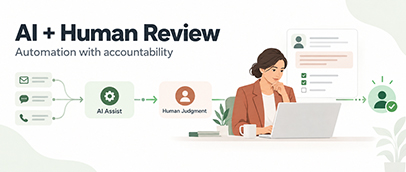
| Hybrid AI plus human | Provider, with your governance | Growth-stage or seasonal brands, multilingual coverage | Ask how AI decisions are reviewed and corrected |
How to evaluate CX outsourcers without getting dazzled by the pitch
Every provider's sales deck looks impressive. The differences show up when you ask specific questions.
Industry fit. A provider that has already solved your category of problem ramps faster and avoids expensive early mistakes. Ask for concrete examples of comparable work and the metrics that changed, not general claims about "experience."
Language and market coverage. Coverage on paper does not help if it is not where your customers are, or where you plan to grow next. Ask how native-level quality is verified, and whether agents understand local consumer norms and platform expectations rather than just the language.
Technology and data. Find out what tooling sits behind the agents: routing, knowledge management, quality scoring, AI assistance. Then ask the harder question, which is how the provider's data flows into your systems and how quickly you see it.
Quality governance. Good CX outsourcers show you how they calibrate scoring, coach agents, and handle mistakes. Ask to see a sample quality report and how a real failure was corrected.
Security and compliance. Anything touching customer data needs clear answers on access controls, data handling, and regional privacy rules. Vague answers here are an early warning.
Commercial model. Per-hour, per-ticket, and outcome-linked pricing each reward different behavior. Per-ticket pricing can quietly discourage a provider from deflecting repeat contacts, while pure hourly pricing puts the burden of efficiency on you. Whatever you choose, tie at least part of the fee to a quality metric.
Mistakes that derail outsourcing projects
The most common failure is treating the provider as a black box. Teams sign the contract, hand over a knowledge base written three years ago, and expect brand-quality service in two weeks. It rarely works. Outsourced agents can only be as good as the guidance they receive, so the first weeks should include real training on tone, policy exceptions and product edge cases.
The second mistake is choosing on price alone. A cheap rate paired with high repeat-contact volume costs more than a higher rate with clean resolution. The third is failing to keep an internal owner. Even a fully managed relationship needs someone on your side who reviews reports weekly and can make policy decisions quickly.
What the first 90 days should look like
A healthy start has a rhythm. The first two weeks go to knowledge transfer, system access and shadowing. Weeks three to six are a controlled launch with tight quality review and daily feedback loops. By the third month, the conversation should have moved from "are they doing it right" to "what patterns is the data showing us," including recurring product issues, confusing policies, and moments where customers keep getting stuck.
Why brands choose Nexlence

Nexlence is a global AI-powered CX partner offering customer service outsourcing, multilingual support and intelligent CX solutions, with 5,000+ professionals across 20+ delivery centers worldwide. Its delivery model pairs human agents with X-Force, a proprietary AI platform built for enterprise CX operations, so routine work moves faster while people handle the conversations that need empathy and judgment.
Language coverage includes English, Portuguese, Spanish, Russian and more, and the team has experience across e-commerce, consumer electronics, media and entertainment, and manufacturing. On multilingual e-commerce operations, Nexlence has reported customer satisfaction above 88%. For brands weighing CX outsourcers, the practical appeal is a single partner that can cover scale, languages and AI-assisted quality without stitching together several vendors.
Related guide: What Do Customer Experience Solutions Companies Actually Do?
Frequently asked questions
What is the difference between CX outsourcing and call center outsourcing?
Call center outsourcing usually refers to voice-centered contracts measured on volume and handle time. CX outsourcing is broader: it spans multiple channels, dispute handling, onboarding, moderation and insight, and it is typically measured on outcomes like resolution, satisfaction and retention.
How do I know whether it is time to work with CX outsourcers?
Common signals include response times that slip during peaks, growing demand for after-hours or multilingual coverage, experienced staff stuck on routine tickets, or a launch in a new market where you have no local capability.
Is CX outsourcing only for large companies?
No. Smaller and mid-sized brands often benefit most, because they can access trained teams and tooling without the fixed cost of building a department. The key is choosing a model, such as a hybrid or usage-based one, that fits your volume.
Will outsourcing hurt my brand voice?
It can if onboarding is rushed. Providers with strong training and brand-voice guidelines can keep the experience consistent, but you need to supply clear tone guidance, approved examples, and a fast route for questions.
How should I compare pricing between providers?
Compare cost per resolved issue, not just cost per hour or ticket. Include repeat contacts, escalation rates and quality scores in the comparison, since those drive the true cost.
Should I keep some support in-house?
Many brands do. A common pattern is to keep complex, high-touch or strategic accounts internal and outsource high-volume or routine interactions, with a clear escalation path between the two.
Conclusion
Choosing among CX outsourcers is less about who has the longest client list and more about who fits the way your customers actually behave: their languages, channels, peak seasons and expectations. Start by defining the outcomes you care about, pick an engagement model that matches your control needs, and test providers with specific questions on quality, data and security. Do that, and outsourcing becomes a way to raise the standard of your customer experience, not just to lower its cost.
Sources
Harvard Business Review, "The Value of Keeping the Right Customers"; Bain & Company, "The Economics of Loyalty" (Frederick Reichheld); Deloitte, 2025 Global Business Services Survey; Deloitte, Global Outsourcing Survey 2022; Nexlence official website (company profile and industry case data)















 Nexlence





 PREVOUS ARTICLE