Quick Answer
Augment AI means using artificial intelligence to improve what people can do, not simply replacing them with machines. In customer experience, the goal is straightforward: let AI handle repetitive work, give employees better information, and help customers resolve problems faster. The real measure of success is not how much work AI takes over, but whether customers get better results.
Why Does More AI Not Always Mean Better Customer Experience?
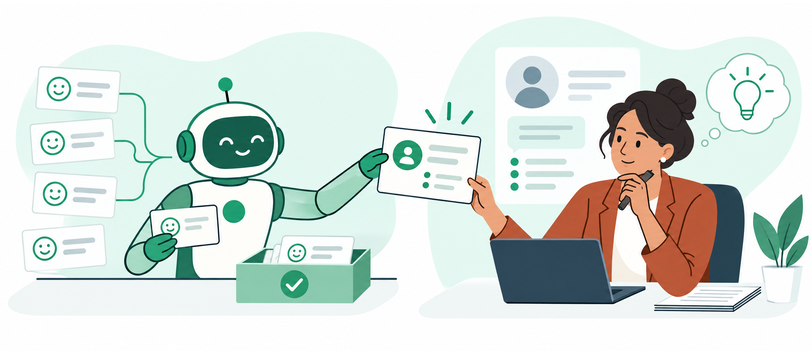
Businesses don't need more automated conversations. They need more customer problems solved.
A chatbot can answer thousands of questions without resolving the issue behind them. An AI assistant can draft responses faster while agents still struggle to find accurate information. Automation can reduce the number of tickets reaching a human team, yet customers may return because their original problems remain unresolved.
This is the gap between deploying AI and getting value from it.
The pressure to automate is understandable. Customer expectations keep rising, support teams must manage more channels, and international brands need to serve customers across languages and time zones. But adding another AI tool does not automatically fix fragmented data, unclear policies, or disconnected service processes.
Augment AI works when it removes the work that gets in the way of solving customer problems.
That could mean finding an order update without searching several systems, summarizing a long complaint before an agent responds, or identifying a recurring product issue before more customers encounter it.
The technology matters. What it changes in daily operations matters more.
Where Does Augment AI Make a Real Difference?
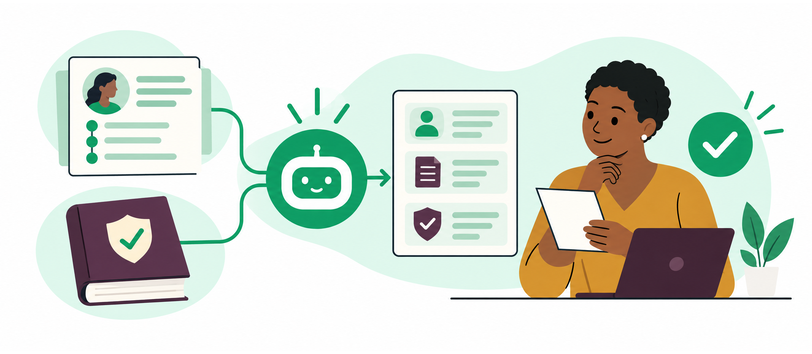
The best place to start is not with the most impressive AI capability. It is with the task that wastes time, creates friction, or repeatedly leads to poor service.
Routine Questions Should Not Consume Expert Time
An agent does not need to spend several minutes answering every question about shipping status, return policies, or basic product information. When the answer is clear and the underlying data is reliable, AI can handle these requests directly.
But automation needs limits. A standard delivery question is different from a customer whose expensive order has disappeared. A routine return request is different from a disputed refund.
AI should resolve straightforward cases and recognize when it cannot safely resolve the rest. When a case needs human attention, it should transfer the conversation with the relevant history attached.
The objective is not to automate every inquiry. It is to stop routine work from crowding out work that requires human judgment.
Agents Need Context, Not Another Tool to Manage
Consider a customer who has contacted a brand three times about a defective product.
The next agent should not have to reconstruct the entire story from separate tickets, emails, and chat logs. AI can summarize the previous conversations, retrieve the relevant policy, and surface the actions already taken.
The agent can then focus on the actual decision: what will resolve the customer's problem?
This is where AI augmentation becomes practical. It reduces the effort required to understand a case without removing the employee's responsibility to handle it properly.
For service teams, that can mean less time searching for information, more consistent responses, and fewer customers forced to repeat themselves.
Customer Complaints Should Reveal Problems, Not Just Generate Tickets
A rising number of support requests may indicate that the support team needs more capacity. It may also indicate that something upstream is broken.
If hundreds of customers ask the same question about a product, the problem might be an unclear product page. If complaints increase after delivery, the cause may lie in fulfillment or communication rather than customer service itself.
AI can group conversations, identify recurring themes, and help teams investigate where the friction begins. Human reviewers can validate those patterns and decide what needs to change.
The benefit extends beyond the contact center. A clearer product description, a more useful order notification, or a simpler return process may prevent the next wave of inquiries altogether.
Related guide: AI Driven Customer Experiences: How AI Is Transforming the Future of Customer Experience
What Stops Augment AI From Delivering Results?
AI performance depends on the operation around it. Three common problems can undermine an otherwise capable system.
| Problem | What happens | What businesses should do |
|---|
| Incomplete or outdated information | AI gives answers that sound convincing but are wrong | Connect approved knowledge and reliable operational data; review information regularly |
| Poor escalation | Customers get trapped in automated conversations | Define clear handoff rules and give agents the full conversation context |
| Weak performance measurement | Automation rates improve while unresolved issues remain | Track resolution quality, repeat contacts, customer satisfaction, and efficiency together |
These are operational problems, not simply model problems.
The National Institute of Standards and Technology (NIST) identifies reliability, risk management, and ongoing evaluation as important considerations in managing generative AI systems. Its Artificial Intelligence Risk Management Framework: Generative Artificial Intelligence Profile provides guidance for organizations assessing these risks.
The lesson is simple: AI should operate within clear boundaries, use dependable information, and be evaluated against real service outcomes.
A system that answers quickly but misleads customers is not performing well. A system that knows when to involve a human may deliver more value than one that tries to handle every request independently.
How Should Businesses Measure Augment AI?
Start with the problem the business wants to solve. Then choose metrics that show whether it has actually been solved.
| If the goal is to… | Measure… | Watch out for… |
|---|
| Reduce waiting | First-response time | Fast responses that do not answer the question |
| Resolve more issues | First-contact resolution and repeat-contact rate | Tickets closed before the customer’s problem is fixed |
| Automate routine work | Verified resolution rate and escalation rate | High automation with poor answer quality |
| Improve customer experience | CSAT and complaint trends | Efficiency gains accompanied by lower satisfaction |
| Support multiple markets | Quality and resolution metrics by language and region | Strong overall results hiding weak local performance |
No single number tells the whole story. A high automation rate can look impressive even when customers abandon conversations or contact the company again.
Businesses should establish a baseline before introducing AI, then compare results over time. They should also review different inquiry types separately. Automating password resets and handling sensitive billing disputes are not equivalent tasks, so their performance should not be judged in the same way.
The right question is not, “How many interactions can AI handle?”
It is, “Which customer problems are being resolved better, and what evidence proves it?”
How Can Nexlence Help Put Augment AI Into Practice?
For global brands, customer experience is rarely a single chatbot or contact center. It involves multiple channels, markets, languages, operational systems, and teams.
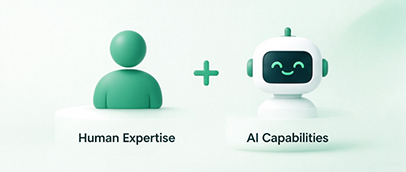
Nexlence combines AI-driven customer experience capabilities with human expertise to support these connected operations.
Its X-Force platform focuses on AI orchestration, quality assurance, operational monitoring, and measurable business value. Its global customer contact services combine multilingual support with human operations across channels and time zones.
This combination addresses a practical challenge: automation must work within the realities of customer service.
AI can help retrieve information, support agents, and manage suitable tasks. Human teams can handle exceptions, sensitive complaints, and interactions that require local knowledge or judgment. Quality monitoring helps identify where the process needs attention.
For a cross-border e-commerce business, that may mean coordinating inquiries, disputes, and complaints across languages and regions. For a consumer electronics brand, it may mean connecting pre-sales questions with after-sales support so customers receive more consistent assistance.
The right approach depends on where customers experience friction and what the business needs to improve. AI should be introduced to solve those problems, not simply because another tool has become available.
Learn more about Nexlence's digital customer experience solutions.
Conclusion
AI is easy to buy. Better customer outcomes are harder to deliver.
The difference comes down to how the technology is used: whether it removes repetitive work, gives agents the context they need, identifies problems behind recurring complaints, and knows when a human should take over.
Businesses that focus only on automation may end up with faster interactions but the same unresolved problems. Those that focus on outcomes can use AI to make service more efficient without losing accuracy, accountability, or the human touch.
The starting point is not another AI deployment. It is identifying what customers struggle with today—and proving that the next solution makes it better.
FAQ
What does augment AI mean?
Augment AI means using artificial intelligence to enhance human capabilities. In customer service, it can automate routine inquiries, help agents find information, summarize conversations, and identify recurring customer issues.
How is AI augmentation different from AI automation?
AI automation allows a system to perform tasks with limited human involvement. AI augmentation focuses on helping people work more effectively, although some tasks may still be fully automated. Many customer service operations combine both approaches.
How can a business tell whether augment AI is working?
Measure customer outcomes alongside operational efficiency. Useful indicators include verified resolution rates, repeat contacts, first-response time, customer satisfaction, and the accuracy of AI-generated answers.
Sources















 Nexlence





 PREVOUS ARTICLE