We use cookies to improve our site. By using or further navigating our site you accept our cookie policy.Please click here to check the Privacy Policy and Cookie Policy.



Smart
Empowerment

2026-10-22
 Nexlence

Your customer service team is answering messages all day. The queue keeps growing, customers are following up before receiving a response, and managers are asking agents to work faster.
Hiring more people seems like the obvious solution.
But what if the real problem is not the number of agents?
Customers may be contacting your company repeatedly because the first response did not resolve their issue. Agents may be waiting for information from another department. Your team may be handling several channels without a clear way to track the same customer's history.
In these situations, adding headcount can make the support operation larger without making it better.
Online customer service outsourcing can help businesses expand their support capacity, but its real value depends on what the external team is expected to fix. Effective Customer Service Outsourcing Services should address the operational gaps behind growing queues, repeated contacts, and disconnected workflows—not simply add more agents to the existing process.
A growing support queue is a symptom, not a diagnosis. Before looking for customer service outsourcing providers, examine what is making the queue difficult to manage.
Three problems are particularly easy to confuse.
A customer asks about an unresolved payment, delivery, account problem, or service request. They receive a response, but the response does not explain what happens next.
A few hours later, they contact support again.
The second message becomes another ticket, another task for an agent, and another entry in your response-time metrics.
The operation may appear busy because it is handling a large number of contacts. But some of that volume is being generated by the company's own inability to close the loop.
What to examine: Look at repeat contacts for the same issue, not just total ticket volume.
If customers repeatedly ask for updates, investigate whether agents have access to the information needed to provide a clear answer. If the issue depends on another department, establish who owns the follow-up and when the customer should hear back.
An outsourced team can manage follow-ups, but it needs a reliable process for obtaining updates and communicating them.
An agent may know how to communicate with customers but still struggle to resolve their questions.
They might need to search several internal systems, ask a supervisor to confirm a policy, or wait for another team to provide information.
The customer sees a slow response. The agent sees a complicated workflow.
Outsourcing can provide additional capacity, but transferring an inefficient workflow to an external team does not remove the underlying delays.
What to examine: Identify the questions agents cannot answer independently.
If the same question repeatedly requires supervisor approval, determine whether the policy can be documented or whether agents can be given clearer decision-making authority.
Before onboarding an outsourcing team, organize the knowledge it needs: current policies, common scenarios, approved responses, and escalation contacts.
The goal is to make routine inquiries easier to resolve without compromising decisions that require internal expertise.
Customers may contact a company through email, live chat, social media, or messaging applications.
If each channel is managed independently, the same customer can end up interacting with several agents who do not know what has already happened.
This creates repeated explanations, inconsistent answers, and unnecessary work.
What to examine: Track how often customer conversations require a transfer between channels or agents.
A provider that supports multiple channels may help expand coverage. However, channel coverage alone does not guarantee a connected customer experience.
Before outsourcing, determine how customer history, case ownership, and follow-up responsibilities will work across the channels involved.
Not every support problem calls for an external team. The most useful decision is to identify whether your operation lacks capacity, expertise, coverage, or an effective process.
Use the following scenarios to narrow down the problem.
| What You Notice | Likely Issue | Practical Next Step |
|---|---|---|
| The queue grows during predictable busy periods | Insufficient capacity | Consider flexible outsourced staffing |
| Customers wait outside existing operating hours | Limited coverage | Evaluate extended-hours or follow-the-sun support |
| Agents repeatedly ask managers the same questions | Knowledge or authority gaps | Improve documentation and decision rules |
| Customers repeat information after transfers | Disconnected workflows | Establish shared case history and ownership |
| Complex cases remain unresolved | Expertise or escalation gaps | Define specialist support and escalation responsibilities |
| Service quality declines as volume increases | Capacity and quality controls are misaligned | Evaluate training, QA, and staffing together |
A company may have several of these problems at once. It does not necessarily need to outsource every support function.
For example, an internal team could retain sensitive customer decisions while an external team handles routine inquiries, initial triage, and follow-up communications.
The best arrangement is the one that removes the specific bottleneck without creating unnecessary handoffs.
One of the most common mistakes is transferring an entire support operation before understanding which tasks are suitable for external handling.
A more practical approach is to start with a defined group of customer interactions.
Look for questions that occur frequently and can be resolved using documented information.
Examples include:
These interactions can often be supported by clear procedures and structured knowledge resources.
However, a repetitive question is not automatically easy to outsource. If resolving it requires access to sensitive data, an internal approval, or an exception to company policy, the workflow needs to be designed accordingly.
Some interactions require internal authority or specialist knowledge.
A customer may request an exception, challenge a decision, raise a sensitive complaint, or report a problem that requires investigation.
In these cases, the outsourced agent may be responsible for gathering information, explaining the process, and keeping the customer informed. The final decision can remain with the internal team.
This distinction should be agreed upon before launch.
A useful operating rule is to define three levels of responsibility:
1.Resolve: The agent can complete the request using approved procedures.
2.Coordinate: The agent gathers information and follows up with the responsible internal team.
3.Escalate: The issue requires specialist judgment, authorization, or a sensitive decision.
Clear boundaries help agents act confidently while protecting the company's control over important decisions.
The right outsourcing model depends on how closely agents need to work with your internal operation.
A shared team may be suitable for predictable, straightforward inquiries. A dedicated team may be more appropriate when agents need deeper familiarity with company policies or customer history.
Staff augmentation can add capacity while leaving daily management with the company. A fully managed arrangement may be more suitable when the business also needs external operational management.
But the distinction that matters most is not simply dedicated versus shared.
It is how much coordination the arrangement requires from your internal team.
Consider a business that outsources routine customer inquiries but still requires its managers to answer agent questions, review every difficult case, correct inconsistent responses, and chase unresolved tickets.
The business has added agents, but it has not necessarily reduced the management burden.
Before choosing a model, ask:
How much time will our managers spend supporting the external team?
A lower-cost model may not be the most economical choice if it requires substantial internal supervision.
A short pilot can help businesses understand whether outsourcing will improve their operation before committing to a larger arrangement.
Rather than transferring all customer inquiries immediately, choose a specific channel, contact category, or operating period.
For example, a company might assign an external team to routine inquiries while keeping complex complaints with its internal staff.
Before the pilot, establish a baseline.
Review how long customers wait, how often they contact support again, how frequently cases are escalated, and how well their issues are resolved.
Do not rely on ticket volume alone. A large number of closed tickets can conceal unresolved customer problems.
Provide the team with the information and authority required to handle its assigned interactions.
Document what agents can resolve, what they should coordinate, and what must be escalated.
If the provider cannot access necessary systems or information, identify how agents will obtain it without creating excessive delays.
Compare the pilot with the original operation.
Useful measures include:
A faster first response is encouraging, but it should not be treated as a complete success if customers still need to contact the company repeatedly.
If the pilot improves resolution and maintains service quality, consider extending the arrangement to additional channels or contact categories.
If the results are disappointing, determine whether the cause was inadequate training, missing information, unclear authority, insufficient staffing, or a process that needs to be redesigned.
The pilot should help answer a business question, not simply demonstrate that an external team can process tickets.
During provider discussions, ask for evidence of how the proposed operation will work in practice.
Instead of asking only how many agents are available, present a realistic customer scenario.
For example:
A customer has already contacted support twice about an unresolved issue. The latest agent does not have the information needed to provide an update. What happens next?
A capable provider should be able to explain how the case is reviewed, who obtains the missing information, how ownership is maintained, and how the customer receives a meaningful update.
Other useful scenarios include:
These discussions reveal more about operational readiness than a general promise of excellent customer service.
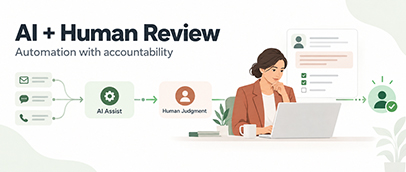
AI can help with specific support tasks, but it should not be treated as a replacement for operational design.2
For example, AI-assisted tools may help agents find relevant information, summarize previous conversations, classify incoming requests, or identify interactions that need additional review.
These applications can be useful when agents spend considerable time searching for information or documenting cases.
However, AI cannot independently resolve a company policy that is unclear, obtain an approval that nobody owns, or guarantee that information in disconnected systems is accurate.
When evaluating an outsourcing provider's AI capabilities, ask what happens when the suggested answer is incorrect, when a customer has an unusual request, or when a case requires a human decision.
The relevant question is not whether the provider uses AI. It is whether the workflow produces better customer outcomes and whether the business can maintain appropriate oversight.

Nexlence may be worth considering when a company needs additional customer service capacity alongside broader customer experience operations.
For businesses managing multiple digital channels, markets, or languages, the challenge may extend beyond answering individual inquiries. It may involve coordinating customer interactions, maintaining service consistency, managing escalations, and adapting support capacity as requirements change.
Nexlence's customer experience approach includes customer service operations, multilingual support, digital channels, and AI-assisted workflows supported by human teams.
The important consideration is whether these capabilities address the problems your business is experiencing.
Before discussing an outsourcing arrangement, identify which customer interactions are creating the greatest operational pressure, where internal teams are spending too much time, and which responsibilities need to remain in-house.
That information provides a more useful starting point for evaluating a provider than a general request for additional agents.
Related guide: Best Customer Support Outsourcing Companies (2026 Guide)
It can, provided the external team has the information, authority, and processes needed to resolve customer issues effectively. If repeat contacts are caused by missing information or unclear internal ownership, those problems should be addressed as part of the outsourcing arrangement.
Many businesses benefit from outsourcing selected interactions first. Routine inquiries, initial triage, and defined follow-up tasks may be suitable for external handling, while sensitive decisions or specialist issues remain internal.
Provide clear communication guidelines, approved policies, structured training, and regular quality reviews. Establish which decisions agents can make independently and how customer feedback is used to improve the operation.
No. Pricing should be considered alongside resolution quality, training requirements, management effort, service coverage, and the cost of repeat contacts. A provider that requires extensive internal supervision may create additional operational expense.
Start with an overview of customer contact reasons, current support performance, communication channels, service policies, escalation rules, and expected coverage. These details help define a realistic scope and give the provider the information needed to build an effective support operation.
Online customer service outsourcing is most useful when it addresses a clearly identified operational problem.
If your team cannot keep up with customer demand, an external team may provide additional capacity. If customers repeatedly contact you about unresolved issues, the more important task is to improve resolution and follow-up. If agents struggle to find information or obtain approvals, the outsourcing arrangement needs to account for those dependencies.
Before selecting a provider, look beyond the size of its agent pool. Understand where customer interactions become difficult, decide which responsibilities can be transferred, and establish how the external team will work with your internal operation.
The goal is not simply to outsource more conversations. It is to make customer support easier to manage and more effective for the people who depend on it.

















 PREVOUS ARTICLE